Moving to Luxembourg in 2026: €68k+ Median Salary, Free Transit & Rent Reality
June 8, 2026
ShareLuxembourg pays the highest median wage in the European Union - €68,000 gross/year in financial services, and routinely above €80,000 for senior roles in tech, law, and fund management. It is the only country in the world where all public transport - trains, trams, buses, funicular - is entirely free, nationwide, for everyone, forever.** The financial sector manages assets worth more than 60 times the country's GDP. And 48% of residents are non-Luxembourgish nationals - making this one of the most genuinely international places to live in Europe.[1][2][3]
The housing market is not subtle about what it expects from you in return. A studio in Luxembourg City costs €1,590/month. A 2-bedroom apartment runs €2,800-3,500/month. Property in the centre costs €10,499/sqm. Plan your budget before you plan your move.[4][5]
The Economy: Financial Hub, Modest Growth, Structural Strength
Luxembourg is not growing fast. GDP expanded by 0.6% in 2025 after 0.4% in 2024 and 0.1% in 2023. Statec - Luxembourg's national statistics office - forecasts 1.7% growth in 2026, rising to above 2% in 2027. The OECD projects 2.3% in 2026, more optimistic than Statec. The European Commission's autumn 2025 forecast put Luxembourg at the lower end of the eurozone range.[6][7][8][9]
None of this changes the structural reality: Luxembourg is the world's second-largest fund management centre after the United States, with €7.2 trillion in investment fund assets under management. The financial sector, legal services, information technology, and logistics underpin employment and salaries that bear no resemblance to the GDP growth rate. Unemployment is forecast to fall from 6% to 5.8% in 2026. Inflation: 1.5% in 2026, down from over 2% in 2025. Mortgage rates (variable) have declined to approximately 3.3% - the most accessible financing in three years.[2][10][6]
For expats, the job market consequence is straightforward: Luxembourg is a hiring market for fund administrators, risk managers, compliance officers, lawyers specialising in EU financial law, software engineers, and experienced executives. It is a thin market for anyone outside these sectors.
Visas and Residency: EU Freedom vs Third-Country Queue
Luxembourg enforces the full EU freedom of movement framework. The experience for EU nationals and non-EU nationals is structurally different in a way that matters immediately.
EU/EEA Nationals
No visa, no work permit, no prior authorisation. Arrive, register with your commune (local municipality) within 3 months of arrival, and obtain your Certificate of Registration - the equivalent of a residence declaration. Registration documents required:[11][12]
- Valid national ID or passport
- Proof of accommodation (lease or property deed)
- Employment contract or proof of financial self-sufficiency + health insurance
- Civil status documents (birth certificate, marriage certificate if applicable)
After 5 years of continuous legal residence, EU nationals can apply for a permanent residence permit - granting unconditional right to remain and work indefinitely.[13]
Non-EU/EEA Nationals (Third-Country Nationals)
Route 1 - EU Blue Card (Highly Qualified Workers)
Luxembourg's EU Blue Card is the cleanest path for senior non-EU professionals.
| Requirement | Detail |
|---|---|
| Minimum annual salary (2026) | €63,408 gross (~€5,284/month)[1] |
| Qualification | Higher education degree (bachelor's or above) or 5 years' specialist experience[1] |
| Employment contract | Minimum 1 year, for a role matching qualifications[1] |
| Labour market test | Not required[1] |
| Processing time | Typically 30 days after submission[12] |
| Government fee | €80[1] |
After 18 months in Luxembourg on the Blue Card, you can move to another EU Blue Card country without a new labour market test - significant for professionals considering mobility within Europe.[12]
Route 2 - Standard Work Permit (Salaried Worker, Third-Country)
For roles not meeting the Blue Card salary threshold. The employer declares the vacancy to ADEM (the National Employment Agency), which verifies no suitable Luxembourgish or EU candidate is available before granting clearance. This labour market test adds significant time - up to 3 months for ADEM review alone. Only after clearance can the employer contract the third-country national and initiate the visa application.[12]
The Type D long-stay visa process then requires:[12]
- Temporary authorisation to stay (from Immigration Directorate)
- Type D national visa (from Luxembourg embassy in home country)
- Arrival + commune registration
- Residence permit application (within 3 days of start of work)
- Mandatory medical examination
Total timeline from job offer to legal work start: typically 3-6 months for non-Blue Card third-country nationals.
Permanent Residency
5 years of continuous legal residence on a valid permit - for both EU nationals and non-EU nationals. During those 5 years, you must not have been absent for more than 6 consecutive months (or 12 months total for justified reasons like professional assignment).[13]
Luxembourg Citizenship
One of the most sought-after passports in Europe - full EU mobility, visa-free access to 187 countries. Requirements:[11]
- 7 years of registered residence in Luxembourg
- Luxembourgish language test (oral - B1 level minimum)
- Integration course or prior successful integration demonstration
- Renunciation of prior citizenship is not required - Luxembourg accepts dual nationality
The language requirement is Luxembourgish (Là«tzebuergesch) - not French or German. The oral test is the same Level B1 standard for all applicants regardless of origin. Community language classes are available free of charge through the Ministry of Education.[11]
No Digital Nomad Visa
Luxembourg has no dedicated digital nomad visa. EU citizens can live and work remotely under their EU rights. Non-EU nationals without an employment contract in Luxembourg have no clear legal pathway to remote work from Luxembourg.[12]
Cost of Living: Global Financial-Centre Pricing
Luxembourg ranks 12th in Crowdsourced Data's 2026 Global Cost of Living Index, scoring 65.2 against New York City's 100 - ahead of Norway, Ireland, the Netherlands, Denmark, and Germany. Everyday costs are more than double the global median of 30.8.[15]
The honest monthly budget for a single working expat in Luxembourg City:
- Rent (1-BR, city centre): €1,900-2,800/month[16][4]
- Groceries, utilities, transport (free), personal: €900-1,200/month[17]
- Health insurance + CNS co-pays: €150-300/month
- Total: approximately €3,000-4,300/month
Salary at this level: achievable in financial services, legal, or tech roles. The minimum social wage in Luxembourg in 2026 is approximately €2,639/month (unqualified workers) and €3,166/month (qualified workers) - the highest statutory minimum wages in the EU.[2]
Rent by Location (2026)
| Area | Studio | 1-Bedroom | 2-Bedroom |
|---|---|---|---|
| Luxembourg City Centre | €1,590-2,000 | €1,900-2,800 | €2,800-3,800[4] |
| Kirchberg / Clausen | €1,700-2,200 | €2,000-3,000 | €3,000-4,000[4] |
| Limpertsberg / Belair | €1,500-2,000 | €1,900-2,800 | €2,700-3,600[10] |
| Esch-sur-Alzette | €1,000-1,400 | €1,300-1,800 | €1,800-2,500[5] |
| Strassen / Bertrange | €1,200-1,700 | €1,600-2,200 | €2,200-3,000[10] |
| Northern Luxembourg | €700-1,100 | €950-1,400 | €1,300-1,900[5] |
Source: Investropa, Immotop.lu January 2026[5][4]
Rental supply is exceptionally tight. National vacancy rate: ~2%; in Kirchberg and Limpertsberg, it drops below 1.5%. Apartments disappear within days of listing. Using a registered real estate agent (agence immobilià¨re) costs 1 month's rent (tenant pays) but dramatically increases access speed.[4]
Daily Expenses (Luxembourg City, 2026)
| Item | Price (EUR) |
|---|---|
| Meal at inexpensive restaurant | €23[17] |
| Three-course meal for two (mid-range) | €80[17] |
| McDonald's combo | €13.50[17] |
| Monthly public transport | €0 (free nationwide)[18][3] |
| Taxi start | €4.20[17] |
| Cappuccino | €3.50-5 |
| Bottle of wine (mid-range, shop) | €10[17] |
| Domestic beer (500ml, shop) | €1.96[17] |
| Weekly grocery shop (single person) | €70-120[19] |
The free public transport is not a minor perk - it eliminates what in comparable European cities would be a €100-200/month transport cost. Buses, trams, regional trains, and the CFL national railway are all free in second class. Cross-border transport (to Belgium, Germany, France) is chargeable, but passes are available at the Mobilitéitszentral.[18]
Taxes: Progressive, Expensive Above €200k, Competitive in the Middle
Luxembourg's personal income tax is progressive, with a 0% threshold up to €13,230 and a 42% top rate on income above €234,870. The structure looks steep at the top but is genuinely competitive for the €60,000-€150,000 income range common among expat professionals.[20]
2026 Tax Bands (Simplified - Class 1, Single Person)
| Annual Taxable Income (EUR) | Marginal Rate |
|---|---|
| 0 - 13,230 | 0%[20] |
| 13,230 - 15,435 | 8% |
| 15,435 - 24,255 | 9-12%[20] |
| 24,255 - 54,090 | 14-38%[20] |
| 54,090 - 117,450 | 39%[20] |
| 117,450 - 176,160 | 40%[20] |
| 176,160 - 234,870 | 41%[20] |
| 234,870+ | 42%[20] |
A solidarity surcharge applies on top of income tax: 7% of the tax liability for incomes up to €150,000 (Class 1); 9% above €150,000.[21][20]
Real-world example: A single professional earning €90,000/year in Luxembourg in 2026 has an estimated effective total tax rate (income tax + solidarity surcharge) of approximately 20-22% before social contributions. After social contributions (~12.55%), effective take-home is roughly €55,000-58,000/year (~65%).[22]
Important distinction from your home country: Luxembourg taxes income on the income earned in Luxembourg only. If you are a cross-border worker living in Belgium, France, or Germany and commuting to Luxembourg, your tax situation depends on bilateral treaties - you may pay Luxembourg income tax but social contributions in your country of residence.[20]
Social Contributions
Employees contribute approximately 12.55% of gross salary toward pension, health, and dependency insurance - employer contributes a roughly equal share. These are in addition to income tax and are deducted before the tax calculation.[22]
Tax Classes
Luxembourg divides taxpayers into three tax classes based on family status:[21]
- Class 1: Single persons - standard brackets apply
- Class 1a: Single parents or persons over 65 - slightly more favourable
- Class 2: Married couples / civil partners - brackets effectively doubled; very advantageous for couples with significant income disparity
Crypto asset taxation: Gains on cryptocurrency held for more than 6 months are tax-free in Luxembourg. This positions Luxembourg favourably for investors in digital assets.[22]
VAT
Luxembourg's standard VAT rate: 17% - the lowest standard VAT rate in the EU. Restaurant meals, hotels, printed books, and some services attract reduced rates of 3% or 8%.[23]
Healthcare: CNS - Automatic, Comprehensive, Reimbursement-Based
Public System (CNS - Caisse Nationale de Santé)
All employed residents - including expats - are automatically enrolled in the CNS by their employer within 8 days of starting work. Self-employed persons register through the Joint Centre of Social Security. The CNS card (Carte de Sécurité Sociale) arrives by post and functions as your health insurance ID for all medical encounters.[24]
- You pay the doctor or specialist upfront
- You submit the receipt to CNS (via the MyHealth app or post)
- CNS reimburses a defined percentage (typically 80-100% for GP visits, 75-85% for specialists, 90% for hospitalisation)
- You cover the co-pay gap
GP consultation cost: approximately €50-70; CNS reimburses ~€40-55, leaving a co-pay of €10-15. Specialist consultations: variable; co-pays of €20-60 depending on specialty.[27]
Hospital care at the Centre Hospitalier de Luxembourg (CHL) or Hà´pital Kirchberg is excellent - multilingual staff, modern facilities, internationally trained physicians.[27][25]
Supplementary Private Insurance
The gap between actual charges (especially for specialists, dental, optical, and private hospital rooms) and CNS reimbursements can be covered by supplementary VHV (Caisse Médico-Chirurgicale Mutualiste) or private insurance through providers like Foyer, Lalux, or international insurers. Most major employers include comprehensive group supplementary cover as standard.[25]
Emergency: 112 (universal EU emergency number) / 113 (police Luxembourg).[27]
Safety
Luxembourg's national Crime Index: 34.2 - Safety Index: 65.8. The safety picture is mixed in a specific way: residents rate daytime safety at 80.68% "Very High" but night-time safety at a more modest 56.89% "Moderate." The primary concern is drug-related activity (rated "Moderate") - Luxembourg has a visible open drug scene in certain areas of Luxembourg City, particularly around the main train station (Gare) neighbourhood. The Gare area is not dangerous by European standards, but it is the neighbourhood most commonly cited by expats as uncomfortable at night.[28][29]
By Crowdsourced Data's 2026 European city rankings, Luxembourg City sits well below Brussels (55.4 Crime Index) and broadly comparable to Vienna and Dublin. Property crime (home break-in, car theft) is rated "Low." Violent crime and attacks: "Low." Corruption: "Low."[30][28]
Languages: Multilingual Reality
Luxembourg has three official languages: Luxembourgish (Là«tzebuergesch), French, and German. In practice:[11]
- Government and legal documents: French (primary)
- Schools (primary and above): Luxembourgish first, then German, then French
- Business and financial services: English is effectively the working language for international companies
- Daily life: French dominates in shops, restaurants, and public services in the capital; Luxembourgish in more residential areas
- Naturalization test: Luxembourgish (Là«tzebuergesch) - the one language not widely spoken internationally
English works in Luxembourg's financial and tech sector without friction. At international firms like BlackRock, Axa Investment Managers, Deutsche Bank, Amazon Web Services, or Rakuten, entire offices operate in English. Outside the corporate bubble - local government offices, primary schools, smaller shops in residential communes - French or Luxembourgish is expected.
The practical hierarchy: learn French first (immediately useful), learn Luxembourgish progressively (essential for citizenship and social integration), accept that German will come passively over time.
Where to Live
Luxembourg is tiny - 2,586 square kilometres, smaller than Luxembourg City's commuter belt in neighbouring countries. From the northern tip to the French border in the south, the country is less than 90 km end to end. Most expats live either in Luxembourg City itself or within 15-30 minutes of the capital by car or free train.[2]
Luxembourg City
The only realistic base for most expat professionals. The city divides into distinct neighbourhoods:[10]
Kirchberg: Luxembourg's European Quarter. EU institutions (European Court of Justice, Court of Auditors), international banks, KPMG, Deloitte - all headquartered here. Modern apartment blocks, easily walkable to the Philharmonie concert hall and MUDAM museum. Most professionally convenient but architecturally sterile. Rent premium: ~12% above city average.[4]
Limpertsberg: The expat-favourite residential quarter. Grand Victorian and Art Nouveau architecture, Embassy row, excellent schools (European School I is here), tree-lined avenues. Quiet but close to the city centre. Consistently the most desirable neighbourhood for families.[10]
Belair / Merl: Residential, quieter than Kirchberg, strong expat community, good tram connections. A reliable choice for families who want space without the Limpertsberg price premium.[10]
Clausen / Pfaffenthal: The valley below the old town. Excellent restaurant and nightlife access, scenic, but limited flat supply. Prices: premium.
Bonnevoie / Gasperich: More affordable, diverse, well-connected by tram. Gasperich is developing rapidly with new residential and commercial construction. Good value for price-sensitive expats.
Gare District: Immediate vicinity of the central train station. Most convenient for commuters but least comfortable for families - visible drug activity, higher street crime perception at night.[28]
Outside the City: Commuter Communes
Strassen and Bertrange (5-10 km west): Modern suburbs, strong expat concentration, good international schools, slightly lower rents than the capital. Many people with children choose here.[10]
Esch-sur-Alzette (18 km south): Luxembourg's second city. University campus, developing arts and tech scene, significantly cheaper rents (1-BR: €1,300-1,800/month). Growing expat community since ArcelorMittal and Belval campus established research and tech presence. Best for: younger professionals and families who don't need to commute daily.[5]
Northern Luxembourg (Diekirch, Echternach, Vianden): Dramatically cheaper (€950-1,400/month for 1-BR), rural, scenic. Requires a car. Mostly chosen by expats working remotely or in industries outside the capital.[5]
Climate: Temperate, Grey, and Very Wet
Luxembourg has a temperate oceanic climate with genuinely mild temperatures but substantial year-round precipitation. Sunshine hours are among the lowest in Europe - ranking near the bottom alongside Belgium and the UK. Cloud cover is persistent.[31]
| Season | Months | Temperature Range |
|---|---|---|
| Spring | March - May | 6°C to 17°C; rain frequent |
| Summer | June - August | 15°C to 25°C; warm, occasional storms |
| Autumn | September - November | 5°C to 16°C; mist and rain increase |
| Winter | December - February | -2°C to 6°C; frost likely in northern hills; snow occasional |
No extreme weather - no typhoons, no extreme heat events historically (though summer 2026 across northern Europe has been warmer than average). The grey skies from November to March are the most common negative comment from expats arriving from Southern Europe or Asia. The payoff: stunning Ardennes landscape, the Mullerthal gorge and rock formations, autumn wine harvest on the Moselle river.
Internet and Infrastructure
Luxembourg's national broadband plan is mature. Average fixed broadband speeds are in line with Western European peers - national median approximately 110-140 Mbps. Fibre-to-the-premises is available in Luxembourg City and expanding across the country through POST Luxembourg's national rollout. Home broadband plans (500 Mbps): approximately €40-60/month. 5G: available across Luxembourg City and major towns via POST, Orange Luxembourg, and Proximus.[32][11]
Public transport - as stated - is entirely free: all buses, trams, national trains, and the Pétrusse Express funicular. The tram runs north-south through Luxembourg City (Kirchberg to Cloche d'Or) and is being extended. Cross-border trains (Luxembourg-Brussels, Luxembourg-Paris, Luxembourg-Frankfurt) require tickets but are well-served.[3][18]
Road infrastructure is well-maintained. A car is useful for commuters living outside the city and essential for those in rural areas.
Buying Property
No restrictions on foreign buyers - EU or non-EU, resident or non-resident, all can purchase freely. No nationality quotas, no government authorisation requirement for most buyers.[33][34]
2026 Market State: After a peak in March 2024 at €8,615/sqm average asking price nationally, prices have corrected and stabilised. Average asking price in May 2026: €8,118/sqm - down 1.01% YoY from May 2025. In Luxembourg City's Centre region: €10,499/sqm (January 2026). Rental prices hit a record high in January 2026 at €30.57/sqm/month.[5]
The correction created opportunity: transaction volumes jumped 49% in 2024 and mortgage applications surged 33% in mid-2025 as variable rates fell to approximately 3.3%. Investropa's January 2026 assessment: "rather yes" for buying if you plan to hold for several years, with Kirchberg, Limpertsberg, Belair, Strassen, and Bertrange identified as the most liquid locations. Target energy-efficient buildings (A-C energy rating) - they command 5-15% premiums and will be increasingly required by EU energy regulations.[10]
Transaction costs: 8.7-11.7% of property value (registration tax, notary fees, cadastral fees, agency commission). A €600,000 apartment costs approximately €650,000-670,000 all-in.[33]
Registration tax: 6% of sale price (reduced to 3.6% for primary residence on first €1.25 million of value).[33]
Your First 30 Days: The Checklist
- Register with your commune (mairie/gemeinde) within 3 months of arrival - bring passport, rental contract, and employment contract; you receive a Certificate of Registration; this activates most government services[11]
- Wait for your CNS card - your employer registers you within 8 days of starting work; the Carte de Sécurité Sociale arrives by post within 2-3 weeks[26][24]
- Download the MyHealth Luxembourg app - submit CNS reimbursement claims digitally; saves the alternative paper process which can take weeks[26]
- Open a bank account - BGL BNP Paribas, Spuerkeess (BCEE), ING Luxembourg, and PostBank are the main options; bring registration certificate, passport, and employment contract; digital onboarding is limited, most require branch visit
- Non-EU nationals: check your ADEM notification deadline - your employer must notify ADEM within 3 days of your start date; missed notification delays the residence permit process[12]
- Register children in school - European School (for EU institution employees), International School Luxembourg, or the national school system; registration in the state system happens through your commune[11]
- Get a Luxembourg driving licence if needed - EU licences are valid and can be exchanged; non-EU licences are valid for 12 months, then must be exchanged at SNCA (Administration des Transports)[11]
- Start Luxembourgish lessons from year one - free classes are offered by the Ministry of Education through Literacy Luxembourg and ASTI (Integration and Solidarity Action); B1 oral is required for citizenship; leaving it until year 6 creates pressure
- Cross-border workers: clarify your tax treaty position - if living in Belgium, France, or Germany and working in Luxembourg, your social contributions and tax split is governed by bilateral agreements; speak to a cross-border tax adviser before filing your first return
Key Data at a Glance
| Indicator | Value |
|---|---|
| GDP Growth 2025 (actual) | 0.6%[9] |
| GDP Forecast 2026 (Statec) | 1.7%[6] |
| GDP Forecast 2026 (OECD) | 2.3%[8] |
| Inflation 2026 | 1.5%[6] |
| Unemployment 2026 | ~5.8%[6] |
| Mortgage Rate (variable, 2026) | ~3.3%[10] |
| EU Blue Card Min. Salary (2026) | €63,408/year gross[1] |
| EU Blue Card Processing Time | ~30 days[12] |
| Permanent Residency | 5 years continuous residence[13] |
| Citizenship | 7 years + Luxembourgish B1 oral[11] |
| Dual Nationality Allowed | Yes[11] |
| Top Income Tax Rate | 42% (above €234,870)[20] |
| Solidarity Surcharge | 7% (<€150k) / 9% (>€150k)[20] |
| Effective Rate, €90k salary (est.) | ~20-22% income tax[22] |
| Social Contributions (employee) | ~12.55%[22] |
| Minimum Social Wage (qualified) | ~€3,166/month[2] |
| Crypto Gains (held 6+ months) | Tax-free[22] |
| Standard VAT | 17% (EU's lowest)[23] |
| Crime Index | 34.2 (Low)[29] |
| Safety Index | 65.8[29] |
| Public Transport Cost | €0 - entirely free[3] |
| Studio Rent (Luxembourg City) | €1,590/month[4] |
| Property Price (Centre, Jan 2026) | €10,499/sqm[5] |
| Avg Asking Price (May 2026) | €8,118/sqm[5] |
| Transaction Costs (property) | 8.7-11.7% of purchase price[33] |
Luxembourg is the only country in the world that solved its public transport problem by making it free for everyone. It has the highest minimum wage in the EU, the lowest VAT rate in the EU, a citizenship process that permits dual nationality, and crypto gains that are tax-free after 6 months. The housing market is a structural challenge that won't resolve quickly - Luxembourg adds roughly 1.5% to its population annually through migration and is not building fast enough to absorb it. Rent in 2026 is at a record high. That is the trade-off. Everything else tilts heavily in the expat's favour.[3][10]
References
Luxembourg - EU Blue Card Network - Once in Luxembourg you must register with the Commune and apply to the Employment and Immigration de...
Moving to Luxembourg: An Expat's Complete Guide - This comprehensive guide will cover everything you need to know about moving to Luxembourg as an exp...
Mobility in Luxembourg - Free, uncomplicated and sustainable travel on public transport: Luxembourg is the world's first coun...
Updated Rents in Luxembourg (2026) - Investropa - Luxembourg City rents run about 12% higher than the national average, with advertised apartments rea...
Real estate market: property quotations in Luxembourg in 2026 - In May 2026 the average price asked for residential properties for sale was € 8,118 per square meter...
Statec director forecasts improved economic recovery for 2026 - Inflation and unemployment could fall this year, says Statec director Tom Haas.
European Commission Forecast: Luxembourg GDP Growth ... - On Monday 17 November 2025, the European Commission published its "Autumn 2025 Economic Forecast",.....
OECD Economic Outlook, Volume 2025 Issue 1: Luxembourg - The global outlook is becoming increasingly challenging. Substantial increases in barriers to trade ...
Luxembourg Full Year GDP Growth - Full Year GDP Growth in Luxembourg increased to 0.60 percent in 2025 from 0.40 percent in 2024. This...
Is 2026 a good time to buy property in Luxembourg? - Investropa - Is now a good time to invest in real estate in Luxembourg? We study prices, rents, rental yields, su...
The Guide for newcomers in Luxembourg - Here is a practical guide that will answer many questions about your installation, social security, ...
Work visas and permits in Luxembourg: an employer's guide - Remote - The response for a work visa application for a non-EU citizen is typically 30 days. The worker can r...
Employed worker in Luxembourg - Migration and Home Affairs - Are you a non-EU citizen wishing to work as an employed worker in Luxembourg? You can find informati...
Who Can Apply for a Work Visa for Luxembourg in 2026? Eligibility ... - Discover who can apply for a Luxembourg work visa through employer sponsorship, Cat 1 skills, and AD...
Antony Martini's Post - LinkedIn - Luxembourg ranks 12th worldwide in Crowdsourced Data's 2026 Cost of Living Index, with a score of 65.2. Luxembo...
Cost of living in Luxembourg in 2026: Clothing, Food, Housing & More - Rent prices in Luxembourg depend on location. The average monthly rent for a 1-bedroom apartment in ...
What is the cost of living in Luxembourg? Could you please ... - Reddit - Thankfully, a 1bedroom apartment rent only takes a guaranteed minimum of 50% of their wage, we are l...
Luxembourg - Individual - Taxes on personal income - Detailed description of taxes on individual income in Luxembourg
The tax scale in Luxembourg - Tax return guide - Everything you need to know: explanations, advice and examples for your tax return.
Luxembourg Tax Calculator 2026 - Net Income & Tax Rates Online - Official 2026 rates. Free Luxembourg salary calculator: estimate take-home pay, effective tax rate, ...
Luxembourg Personal Income Tax Rate - Trading Economics - The Personal Income Tax Rate in Luxembourg stands at 42 percent. This page provides - Luxembourg Per...
How To Register With The Health System In Luxembourg - If you are an expat employed by a company here, or if you are self-employed, you will be obliged to ...
Luxembourg Health Insurance for Expats - Pacific Prime - International Health Insurance for Expats in Luxembourg: Enhance local insurance with global coverag...
CNS, Reimbursements, and Finding a Doctor (2026) - The Caisse Nationale de Sante, known by everyone as the CNS, is Luxembourg's national health fund. I...
Expat Health Insurance in Luxembourg - Coverage & Plans - Discover healthcare options for expatriates in Luxembourg, with practical tips for easy access and e...
Crime in Luxembourg - Information about crime in Luxembourg. Shows how much people think the problem in their community ar...
Moving to Luxembourg: insights and tips - Expatica - Get an introduction to all the essentials of life as an expat in Luxembourg, from the climate to the...
Internet Speed in Taiwan - Check the fastest broadband and mobile Internet Providers in Taiwan. Take a speed test and compare d...
Property Investment in Luxembourg as a Foreigner - Property buyers pay mandatory registration and notary fees. The associated costs are approximately 8...
Luxembourg - Buying Property - Expat Focus - In February 2026, the average asking price for residential properties for sale in Luxembourg was €8,...
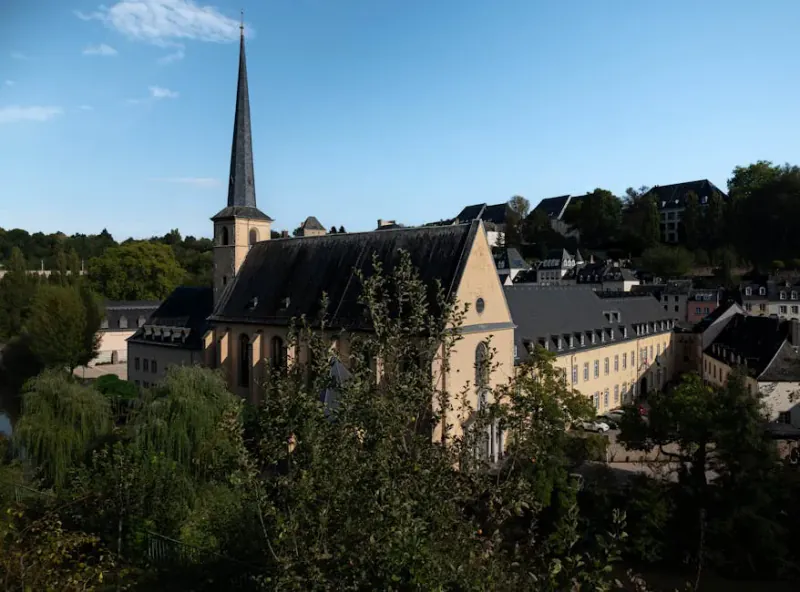
Cover photo by NIKOLAOS IOANNIDIS on Pexels.
Frequently Asked Questions
What is the median wage in Luxembourg? Luxembourg pays the highest median wage in the European Union - €68,000 gross/year in financial services, and routinely above €80,000 for senior roles in tech, law, and fund management.
How much does a 2-bedroom apartment cost in Luxembourg City? A 2-bedroom apartment runs €2,800-3,500/month in Luxembourg City.
Want to see how Luxembourg stacks up?
Are you seriously considering a move? Use our interactive tools to explore Luxembourg's climate, tax brackets, and nomad visas.
Head-to-Head Relocation Comparisons
Compare taxes, safety, and living costs of Luxembourg against top alternatives.