Georgia 2026: The Ultimate Tax Haven? 20% Flat Tax, 365 Visa-Free Days, Zero Property Tax & 5% Growth
June 24, 2026
ShareThe IMF confirmed a 5% GDP growth forecast for Georgia in 2026. January and February alone clocked 8.4% real growth. No other country in the South Caucasus or Eastern Europe comes close to that trajectory. Now add a 20% flat income tax with a full exemption on foreign-source income, no social security contributions, zero property purchase tax, a Numbeo Safety Index of 74.34 - ahead of Vienna, Prague, and Barcelona - and a 365-day visa-free stay for citizens of 95 countries with no income requirement.[1][2][3][4][5]
The counter-facts belong up front. Georgia's public healthcare system is not accessible to expats on temporary stays - you will pay out-of-pocket or carry private insurance. The immigration framework underwent a major reform effective March 1, 2026, introducing mandatory work authorisations that fundamentally changed how foreign workers and entrepreneurs operate legally. Georgian is a language isolate with its own script - most expats never master it, which limits career options to the international bubble. And while the 365-day visa-free stay is generous, it does not count toward permanent residency or citizenship: to build a residency timeline, you need a formal permit.[6][7][8][9][10][1]
Georgia is the most financially efficient relocation in Europe's extended neighbourhood for professionals with foreign income. Know the 2026 rule changes before you land.
The Economy: 5% Growth, Tourism Boom, and a Tech Sector That Is Deliberately Recruiting Foreigners
Georgia's economy grew 7.5% in 2025 - the fastest in the South Caucasus. The IMF and World Bank both project 5% for 2026, moderating from the exceptional 2025 pace as base effects normalise but remaining far above the EU or South American averages.[11][5][12]
The drivers are a mix of structural and cyclical factors: a massive tourism surge, rising re-exports to Russia's sanctioned economy, a construction boom in Tbilisi and Batumi, growing FDI in technology and logistics, and a deliberate government strategy to position Georgia as a regional tech and business hub. Georgia's flat-tax system, minimal social security burden, and liberal property rules are not accidental - they are policy choices made explicitly to attract foreign capital and talent.[5][13]
Sectors actively hiring or attracting international talent in 2026:[7][1][5]
- Technology and software development: Georgia's IT sector has grown significantly since 2022, partly driven by Russian and Ukrainian tech professionals relocating; the government introduced the IT Sector Residence Permit specifically to recruit senior IT talent; Tbilisi has a genuine cluster of international tech companies, outsourcing firms, and startups
- Financial services and fintech: Georgia has one of the most liberal banking sectors in the post-Soviet space; TBC Group and Bank of Georgia are major employers; international fintech companies use Georgia as a regional base for low-cost compliance-friendly operations
- Tourism and hospitality: Over 9 million visitors in 2025; hotel management, F&B, multilingual hospitality, and tour operations are consistent hires - English-speaking professionals command premium salaries within this sector
- Real estate and construction: Batumi and Tbilisi are both in active development cycles; international developers, project managers, and sales professionals are in demand
- Education: International and bilingual schools are actively expanding; English-medium teaching roles are available across the school network
- Remote work / location-independent: This is the largest single expat category in Georgia. The 365-day visa-free stay, USD-friendly banking, rock-bottom cost of living, and fast internet infrastructure in Tbilisi and Batumi make Georgia one of the world's most popular digital nomad bases
For local employment beyond these sectors: Georgian language is required in most local roles, and without it, professional integration outside the international bubble is limited. The typical trajectory is: arrive on visa-free stay, explore, freelance or remote-work, apply for IT permit or investment residency, build Georgian gradually over 2-3 years.
Visas and Residency: The 2026 Reform Changed Everything
Georgia's immigration framework changed fundamentally on March 1, 2026. The pre-2026 system - where you could effectively run a Georgian business or work for a Georgian employer on any permit or even a visa-free stay - is over. The new framework introduces mandatory Right to Engage in Labor Activity authorisation for all foreigners working or doing business in Georgia.[6][7]
Understanding what applies to you before arriving is now essential.
The 365-Day Visa-Free Stay
Citizens of 95 countries - including all EU/EEA nationals, the US, UK, Canada, Australia, Japan, and dozens of others - can enter Georgia and remain for up to 365 consecutive days with only a valid passport.[14][1]
No visa, no application, no income proof, no health insurance requirement for entry. You can leave for one day and re-enter for another 365-day period.[1]
The critical limitation: The 365-day visa-free stay does not count toward permanent residency or citizenship. You are a tourist-category visitor, not a resident. Under the 2026 reforms, if you provide any services to a Georgian entity - even remote services - you now technically require work authorisation.[7][6]
What you can lawfully do on the visa-free stay in 2026:[6][7]
- Live in Georgia
- Work remotely for foreign clients and employers (income sourced entirely outside Georgia)
- Own and manage Georgian property as a passive investment
- Attend language courses, explore the country
- Open a personal bank account and hold Georgian savings
What now requires formal authorisation:[7][6]
- Any employment or service provision for a Georgian-registered entity
- Operating a Georgian d.o.o. (LLC) as an active business (not just as a passive holding vehicle)
- Providing services to Georgian clients as a self-employed person
Route 1: IT Sector Residence Permit (Launched September 2025)
The most significant new immigration product in Georgia in years - purpose-built to attract qualified technology professionals.[15][1]
- Demonstrated experience in the IT sector: minimum 2 years
- Minimum verified income: USD 25,000 per year (approximately USD 2,083/month)
- Physical presence in Georgia: minimum 183 days per year
- Clean criminal record
- Employment contract or verifiable freelance/contract income from IT clients
- Health insurance
Duration: 3 years, renewable up to a total of 12 years.[1]
Counts toward permanent residency: Yes - the IT Sector Permit counts toward the 6-year permanent residency timeline. This makes it the most strategic residency pathway for tech professionals: 6 years of continuous permit holding → permanent residency application.[1]
Tax position: You are a Georgian tax resident once you hold this permit. Georgian-source income taxed at 20% flat. Foreign-source income: 0%.[2][16]
Route 2: Investment Residence Permit - Real Estate
The core route for non-professionals and retirees with capital.[14][15]
Updated 2026 threshold:[15][6]
- Purchase a Georgian property with a minimum market value of USD 150,000 (raised from USD 100,000 effective 2026)
- Provides temporary residence permit for up to 6 years
- Spouse and dependent children (no age limit) can be added to the permit at no additional threshold
- After 6 years of continuous legal residence: eligible for permanent residency
The residency-through-property calculation: A USD 150,000 apartment in Tbilisi's Vake or Saburtalo district is genuinely achievable. This is not a premium niche instrument - it is a practical middle-class option. The property can be rented out while you hold the permit; rental income is taxed at 5% (residential).[17][18]
Existing USD 100,000 permit holders: renewal of current permits obtained at the USD 100,000 threshold is possible without a new appraisal, provided the same property is maintained.[15]
Higher investment route: USD 300,000 in a Georgian business also qualifies for the investment residency, with more favourable treatment for extensions.[14]
Route 3: Employment Residence Permit (Post-2026 Framework)
Requires the Right to Engage in Labor Activity from the Ministry of Labour as the prerequisite - the employer must obtain this before the residence permit can be issued.[6][7]
Process from March 1, 2026:[7][6]
- Georgian employer applies to the Ministry of Labour for Right to Work authorisation on behalf of the foreign employee
- Foreign national applies for a D1 immigration visa from outside Georgia (if not already in country) or files for a labour residence permit within 10 days of starting work if already in Georgia
- Residence permit is linked to employment - terminates with employment
Transition period: Foreign nationals registered in the Ministry of Labour's unified migrant-worker registry before March 1, 2026 have until January 1, 2027 to comply with the new regime.[7]
Route 4: Family Reunification / Marriage to Georgian Citizen
Marriage to a Georgian citizen and 5 years of continuous residence gives access to the simplified naturalisation pathway. The residence permit is granted on the basis of marriage and counts toward the naturalisation timeline.[19][20]
Permanent Residency
After 6 years of continuous legal residence on a formal permit (not the visa-free stay), you may apply for permanent residency at the Civil Registry Agency. The 183-days-per-year physical presence requirement applies during the qualifying period - the permit is revoked if you spend more than 183 consecutive days outside Georgia in any 12-month period.[14][6]
Citizenship: 10 Years, Language and History Exam, and Dual Nationality Mostly Permitted
Georgian citizenship by standard naturalisation requires 10 years of continuous lawful residence.[20][21][19]
Continuous residence means: no absence of more than 90 days per year during the qualifying period - significantly stricter than Uruguay's 183-day rule or Slovenia's framework.[19]
Pathways and Timelines[22][20][19]
| Route | Residence Required | Key Condition |
|---|---|---|
| Standard naturalisation | 10 years (no absence >90 days/year) | Language + history exam |
| Simplified (marriage) | 5 years continuous + marriage to Georgian citizen | Language + history exam; genuine cohabitation required |
| Exceptional procedure (state interest) | No fixed period | Significant investment, academic, sporting, or cultural contribution; Presidential decree |
| Restoration | Former citizens | Separate documentation procedure |
Requirements at the naturalization stage:[21][22][19]
- Georgian language test (conversational level) and basics of Georgian law and constitution exam - both must be passed before submitting the citizenship application; failed exam allows immediate retake; results valid for 1 year
- Lawful continuous residence record
- Documented income (job, business, or investment income sufficient for self-sufficiency)
- Proof of property ownership in Georgia (owning real estate or having a job; property ownership is a standard way to demonstrate connection to Georgia)
- Clean criminal record
- Official name transliteration into Georgian script
The exceptional procedure (Presidential Grant): Available for cases deemed "in the national interest" - substantial economic investment (typically hundreds of thousands of USD), exceptional scientific, athletic, artistic, or cultural contributions. Not a structured programme with published criteria; assessed case-by-case at the Presidential level.[19]
Dual Nationality
Georgia does not prohibit dual citizenship at the receiving end - acquiring Georgian citizenship does not require you to renounce your existing passport. Whether your home country allows you to hold dual nationality is governed by your original country's laws, not Georgian law.[20][21]
This is a significant advantage over Slovenia (which requires renunciation) and over Austria. For most Western European and North American passport holders, dual nationality with Georgia is fully available.
The Georgian passport: Visa-free or visa-on-arrival access to approximately 113 countries as of 2026 - significantly weaker than an EU or Slovenian passport (190+), and weaker than Uruguay's passport (153+). For travel to the US, UK, Canada, or Schengen Zone, Georgian citizens require visas. The passport is most useful for travel within the South Caucasus, most of Asia, and Latin America. Expats seeking a second passport primarily for EU or global mobility should factor this in.[21]
Taxes: The Best Structure for Foreign-Income Earners in Europe's Neighbourhood
Georgia's tax framework is one of the most compelling in the world for specific profiles - particularly professionals with foreign-source income.
The Core Rule[16][23][2]
- Georgian-source income: flat 20% personal income tax
- Foreign-source income for Georgian tax residents: 0% - completely exempt
This is not a temporary holiday or a special regime that requires application - it is the standard operation of Georgian income tax law. If you live in Georgia and receive dividends from an Austrian company, rent from a Polish apartment, or salary from a US employer with no Georgian operations, you pay zero Georgian income tax on that income.[2][16]
The only income that is taxed is income arising in Georgia - local employment, local business income, Georgian rental income, and Georgian capital gains within 2 years.
2026 Tax Rates Summary[23][24][25][2]
| Tax Type | Rate | Notes |
|---|---|---|
| Personal income tax (Georgian-source) | 20% flat | Applies to salary, freelance, business income in Georgia |
| Personal income tax (foreign-source) | 0% | Full exemption for Georgian tax residents |
| Dividend income (Georgian companies) | 5% | Withheld at source |
| Interest income | 5% | On Georgian bank deposits and debt instruments |
| Rental income - residential | 5% | Flat rate for individuals renting Georgian property |
| Rental income - commercial | 20% | Standard rate |
| Capital gains on property - within 2 years | 5% (individuals) | On sale within 2 years of purchase |
| Capital gains on property - after 2 years | 0% | Full exemption after 2-year holding period |
| Corporate income tax (distributed profit) | 15% | On profit distribution only (Estonian model) |
| VAT | 18% | Registration threshold: GEL 100,000 (~USD 36,500/year) |
No Social Security Contributions
Georgia has no social security contributions in the Western sense. The only mandatory scheme is the pension fund contribution, introduced in 2019:[24][25]
- Employee contribution: 2% of gross salary
- Employer contribution: 2% of gross salary
- Government contribution: 1-2% depending on income level
That is the total payroll burden. For comparison: Slovenia's employee-side social contributions are 22.1%; Austria's are approximately 18.2%. The practical difference in take-home pay is massive.
For a professional earning USD 5,000/month locally:
- Georgian income tax: 20% = USD 1,000
- Pension contribution (employee): 2% = USD 100
- Net monthly take-home: USD 3,900
No health insurance contribution deducted at source - private health insurance is purchased directly.
Property Taxes[18][17][23]
Purchase: Zero transfer tax. Zero stamp duty. Registration fee of 50-200 GEL (~USD 20-80). Total government cost of buying a USD 150,000 apartment: approximately USD 80 plus notary and legal fees.[26][17]
Annual property tax: 0-1% of property value, calculated based on household income:
- Household income below GEL 40,000/year (~USD 14,600): 0%
- Household income GEL 40,000-100,000/year (~USD 14,600-36,500): 0.05-0.2%
- Household income above GEL 100,000/year (~USD 36,500): up to 1%[17]
For a USD 150,000 apartment with a household income of USD 40,000/year: annual property tax approximately USD 75-300. For context: a similar property in Vienna would incur thousands of euros in annual charges.
Capital gains: 5% if sold within 2 years; 0% if held for 2+ years.[18][17]
VAT
Standard rate: 18%. Applies to goods and services in Georgia. Registration is mandatory once annual turnover exceeds GEL 100,000 (~USD 36,500). Most individuals working remotely for foreign clients will never hit this threshold. Food, medicines, and books carry 0% VAT.[25][24]
Home Country Tax Obligations
The Georgia exemption on foreign-source income does not affect what you owe elsewhere. US citizens file US returns regardless of residence - Georgia has no tax treaty with the US, though the Foreign Earned Income Exclusion may apply. UK leavers must formally sever UK tax residency. Germans and Austrians must navigate their own exit rules. Check your specific country's treaty status with Georgia before assuming full relief.
Healthcare: Cheap, Largely Private, and Honest About Its Limits
90% of Georgian hospitals are privately owned. This is not a criticism - it means the private system is the real system, and it is surprisingly modern in Tbilisi and genuinely cheap.[8][27]
The Two-Track System[28][29][8]
Universal Healthcare Programme (UHP): Government-funded scheme introduced in 2013 covering emergency care, basic GP visits, and some subsidised surgery for Georgian citizens and permanent residents. Temporary residents and visa-free visitors are not eligible for UHP. This is not a technicality - it is the explicit legal structure.[29][8]
Private clinics (the expat route): Tbilisi has a growing number of modern private hospitals and outpatient clinics with good English-language services. The quality at the best facilities rivals mid-tier European clinics. Costs are extraordinarily low:[27][8]
| Service | Cost (USD) |
|---|---|
| GP visit (private clinic) | $15-30 |
| Specialist consultation | $20-50 |
| Full blood panel | $25-50 |
| MRI scan | $80-150 |
| Dental cleaning and exam | $20-40 |
| Dental filling | $30-80 |
| Day surgery (minor) | $200-600 |
These are not discounted foreigner rates - this is the standard pricing. Many expats pay cash for routine care and carry private insurance only for hospitalisation and emergencies.[30][8]
Mandatory Insurance for All Foreign Visitors (effective January 1, 2026): All foreign nationals entering Georgia are now required to carry health and accident insurance with minimum coverage of 30,000 GEL (~USD 11,000). This is enforced at the border. Most standard travel insurance policies meet this threshold; confirm your coverage before arrival.[8][28]
Insurance Options for Expats[30][27][8]
| Plan Type | Monthly Cost | Coverage |
|---|---|---|
| Local Georgian plan (GPI Holding, Ardi, Aldagi) | $15-30 | Private clinics in Georgia only; good for routine care |
| Comprehensive local plan | $50-100 | Full hospital cover at leading Tbilisi hospitals |
| International plan (Cigna, Allianz, SafetyWing, IMG) | $50-250 | Worldwide; needed for medical evacuation |
Recommended combination: A local Georgian plan ($50-100/month) for routine care at Tbilisi's private hospitals, plus a medical evacuation rider or international emergency policy. For complex procedures - advanced oncology, specialised cardiac surgery, organ transplants - Ankara, Istanbul, or Warsaw are the practical evacuation destinations.[27]
Best hospitals in Tbilisi for expats:[8][30][27]
- Evex Medical Corporation: Georgia's largest private hospital group, multiple Tbilisi locations, English-speaking staff, good diagnostic equipment
- MediClub Georgia: Expat-popular; English-speaking doctors; GP, specialist, and diagnostic services
- Aversi Clinic: Strong outpatient services, pharmacy network, competitive pricing
- New Hospitals Group: International-standard facilities in Tbilisi; partner with international insurers
Emergency number: 112 (ambulance, police, fire). Emergency departments treat all patients regardless of insurance status, though you will be billed afterwards if uninsured.[9]
Safety: Safer Than Vienna, Dramatically Safer Than Most of Latin America
Tbilisi's Numbeo Safety Index of 74.34 and Crime Index of 25.66 place it firmly in the low-crime category. Vienna scores 71.7. Prague 69.6. Buenos Aires 38.0. This is a consistent and important data point that surprises most people who don't know the country.[3]
Georgia's Global Peace Index ranking places it among the more peaceful countries in the Eurasian region. The predominant crime types in Tbilisi are petty theft and pickpocketing in tourist areas - Rustaveli Avenue, the Old Town (Fabrika, Sololaki), and Shota Rustaveli metro station are the main zones for opportunistic theft.[3]
Practical safety picture:[10][3]
- Vake, Saburtalo, Vera, and Mtatsminda are the safest residential neighbourhoods - expat-concentrated, well-lit, low reported incidents
- The Old Town (Sololaki, Abanotubani) is safe for day and evening use but warrants normal urban vigilance after midnight in the bars area
- Gldani and some outer suburbs are less monitored and better avoided at night for new arrivals
- Traffic - not crime - is the most commonly cited safety concern by long-term Tbilisi expats; Georgian driving is aggressive and pedestrian infrastructure is inconsistent; exercise caution crossing roads
- Women travelling or living solo in Tbilisi consistently report feeling safe by the standards of any mid-sized European city
Cost of Living: The Most Affordable Urban Quality of Life in Greater Europe
Georgia is not cheap in the way that the cheapest parts of Southeast Asia are cheap. It is cheap in the way that matters for professionals: the combination of quality, services, and price is exceptional.
Single professional monthly budget (Tbilisi):[31][32][33]
- Total including rent: approximately USD 1,000-1,500/month (comfortable lifestyle)
- Total excluding rent: approximately USD 600-900/month
Family of four monthly budget (Tbilisi, excluding international school fees):[32][31]
- Rent (2-3 BR central): USD 1,000-1,500/month
- Groceries and food: USD 500-700/month
- Transport, utilities, leisure: USD 200-350/month
- Private health insurance (family): USD 90-200/month
- Total: approximately USD 2,000-2,800/month (excluding school fees)
Rent by Neighbourhood (Tbilisi, 2026, in USD/month)[34][35][36]
| Neighbourhood | Studio/1-BR older stock ($/mo) | 1-BR renovated ($/mo) | 2-BR ($/mo) | Character |
|---|---|---|---|---|
| Vake | $350-550 | $700-1,200 | $900-1,800 | The expat heartland - tree-lined, safest feel, international restaurants, high English-speaker density |
| Saburtalo | $300-500 | $500-950 | $750-1,400 | Largest district, commercial centre, excellent services, most new builds |
| Vera | $400-600 | $700-1,100 | $900-1,500 | Bohemian, hilly, hip cafés, popular with remote workers and artists |
| Mtatsminda / Sololaki | $350-550 | $600-1,000 | $800-1,400 | Historic hilltop views, Old Town charm, some older Soviet stock |
| Old Town (Fabrika area) | $300-500 | $550-900 | $750-1,200 | Bars, restaurants, tourist activity, excellent for newcomers, noisier |
| Gldani / Didi Dighomi | $180-300 | $300-500 | $450-750 | Cheapest options; local residential; car or metro needed; less English |
GEL/USD exchange rate in mid-2026: approximately 2.74 GEL per USD.[36]
Rental market dynamics in 2026: Since 2022, Tbilisi's rental market has tightened significantly due to a large influx of Russian and Ukrainian professionals. Rents in Vake and Saburtalo for renovated apartments are 40-60% higher than 2021 levels. The USD 300-500 bracket still exists but increasingly reflects older Soviet-era stock requiring renovation. Budget USD 700-1,000/month for a properly renovated, furnished 1-BR in a desirable Vake or Vera location.[35]
Daily Expenses (Tbilisi, 2026)[33][31][32]
| Item | Price (USD) |
|---|---|
| Meal at inexpensive local restaurant | $4-8 |
| Three-course meal for two (mid-range) | $25-45 |
| Coffee (cappuccino) | $2-4 |
| Georgian beer (restaurant) | $2-4 |
| Glass of Georgian wine (restaurant) | $4-8 |
| Metro single fare | ~$0.30 |
| Monthly bus/metro pass | ~$15 |
| Grocery weekly spend (single person) | $40-70 |
| Gym membership (mid-range) | $20-40/month |
| Petrol (per litre) | ~$0.75-0.95 |
| Home internet (100 Mbps fibre) | $10-20/month |
Georgian wine deserves specific mention. A restaurant-quality bottle of Rkatsiteli or Saperavi from the Kakheti region costs $6-15. At a wine bar, a glass starts at $3. For expats who enjoy wine, this fundamentally changes the entertainment budget equation compared to Vienna, Zurich, or London.
Which City?
Tbilisi
The capital, home to approximately 1.5 million people in the urban area - Georgia's economic, cultural, and intellectual centre by a wide margin. All international schools are here. All major employers are here. The government offices for permits and registration, the Civil Registry Agency, and the Revenue Service for tax purposes are all here or have their primary operations here. Tbilisi has the largest expat community in Georgia and the most developed English-language professional and social infrastructure.[37][10]
Tbilisi's best neighbourhoods for expats:[36][10]
- Vake: The established expat neighbourhood - large Western-style supermarkets, international restaurants, English-speaking landlords, proximity to Vake Park and the forested hills, safest overall feel; the equivalent of Vienna's Döbling or Montevideo's Pocitos; premium pricing reflects demand
- Saburtalo: Tbilisi's largest and most modern residential district; the commercial backbone; good metro connections; newer apartment stock; slightly less "character" than Vake but more practical for daily life; slightly cheaper
- Vera: A hilly, characterful neighbourhood popular with creative professionals and remote workers; independent cafés, art galleries, and international restaurants; 1-BR starts around $500 for renovated stock; slightly fewer English-speaking landlords than Vake
- Mtatsminda / Sololaki: The historic hill neighbourhoods above the Old City; cobblestone streets, 19th-century architecture, panoramic city views; popular with aesthetically-minded expats; some buildings require renovation investment; cable car to the Narikala fortress
Batumi
Georgia's second city and Adjara region's capital - a coastal city on the Black Sea, 340 km west of Tbilisi, with a warm subtropical climate and an increasingly international character.[38][10]
Batumi has undergone aggressive development since the early 2010s: high-rise hotels, a casino strip, a modern beachfront boulevard, and a rapidly growing international resident community attracted by the Black Sea access, lower rents (1-BR in Batumi city centre: USD 300-550/month), and a noticeably warmer climate. The expat community is smaller than Tbilisi's but growing fast.[32][38]
The tradeoff: Batumi's job market outside tourism and hospitality is thin. International schools are very limited - QSI has a small campus but the selection is a fraction of Tbilisi's. For remote workers with a foreign income and no school-age children, Batumi is a legitimate and increasingly popular alternative. For families or professionals needing Georgian employment opportunities, Tbilisi remains the clear choice.
Climate advantage: Batumi's subtropical climate is genuinely warm - summer highs of 28-32°C, mild winters (8-12°C), sea swimming from June to October, and significantly higher annual rainfall than Tbilisi (about 2,500 mm/year vs 600 mm). For expats who want beach access and warmth as the priority, Batumi is the answer.
Kutaisi
Georgia's third city - approximately 150,000 people, positioned in the Imereti region - is beginning to attract budget-conscious expats and retirees. Rents are exceptionally cheap: 1-BR for $100-250/month. Kutaisi has a new international airport with direct European connections (Wizz Air and Ryanair hub), a relaxed pace, and access to western Georgia's wine country, caves (Prometheus Cave), and the Racha highlands.[39][10]
The honest limitation: English is much less prevalent than Tbilisi; there are no international schools; the professional job market for non-Georgian speakers is essentially zero; and the expat community is tiny. Kutaisi works for retirees, extended-stay nomads who prioritise cost minimisation, and adventurous solo travellers building Georgian language skills. It does not work as a primary base for families or working professionals.
City Comparison
| City | 1-BR Rent ($/mo) | Key Profile | Healthcare | International Schools | Best For |
|---|---|---|---|---|---|
| Tbilisi | $500-1,200 (Vake/Saburtalo) | Full urban services, tech, finance, all sectors | Private clinics, 112 emergency | 10+ schools | All expats, families, professionals |
| Batumi | $300-550 | Beach city, tourism, casino, subtropical | Basic private; Tbilisi for serious care | Very limited | Remote workers, retirees, beach lifestyle |
| Kutaisi | $100-250 | Cheap, historic, undeveloped expat scene | Public + basic private | None (local only) | Budget nomads, extended retirees, cost minimisers |
| Sighnaghi | $150-350 | Wine country, tiny romantic village | Nearest hospital in Telavi | None | Remote workers, writers, wine tourism base |
International Schools: Affordable and Growing Faster Than Supply
Tbilisi has approximately 10+ international and bilingual schools, a sector that has expanded significantly since 2022 to serve the growing expat community.[40][41]
Tbilisi International School Fees (2025/26)[41][42][40]
| School | Curriculum | Annual Fees (USD) |
|---|---|---|
| British International School of Tbilisi (BIST) | UK National Curriculum, IGCSE, A-Level | $7,700 (Foundation) - $19,400 (Secondary) |
| QSI International School of Tbilisi | American curriculum, AP programme | $6,200 (Pre-K full day) - $21,600 (Secondary) |
| European School Tbilisi | IB and US Diploma | $10,290-$19,670 |
| New School (International School of Georgia) | IB PYP/MYP/DP | $6,800-$17,400 |
| Caucasus International School (CIS) | IB and Georgian national curriculum | $3,700-$10,300 |
| Georgian-American School | Georgian and US dual curriculum | $3,500 (~GEL 9,500/year) |
| Buckwood International | Cambridge IGCSE, A-Level | $6,800-$13,600 |
For a family with two school-age children at a mid-tier international school: approximately USD 14,000-35,000/year total - significantly cheaper than Vienna, London, or Singapore at equivalent quality tiers, and within the Uruguay range at the mid-tier level.[42][40]
The application reality: BIST and QSI are the most internationally recognised and fill fast - submit applications for September intake by February - March at the latest. CIS and Georgian-American School are the most affordable options and retain genuinely good academic reputations by Georgian standards. The sector has grown to accommodate demand, but the best-value spots go quickly.
Georgia's public school system is taught exclusively in Georgian (and minority languages in specific regions). For non-Georgian-speaking children, local public school integration requires full Georgian language acquisition - achievable for young children in 12-18 months, more challenging for secondary-age students. Private Georgian schools teach English as a primary second language from early years and are significantly cheaper than international schools: approximately USD 1,500-4,000/year.
Buying Property
Georgia is one of the easiest countries in the world for foreigners to buy property - no residency requirement, no nationality restrictions, no special permits, minimal costs.[43][26][18]
Foreigners have the same property rights as Georgian citizens, except for one carve-out: agricultural land cannot be purchased by foreign nationals or foreign-registered companies. All other property - apartments, houses, commercial spaces, non-agricultural land plots, hotel complexes - is fully open.[43][18]
No residency needed to buy. A valid passport is sufficient. You can purchase on a tourist visit and complete the entire transaction in a single day at a Public Service Hall.[26]
USD 150,000 in real estate qualifies you for the investment residence permit (2026 updated threshold).[6][15]
Property Prices (Tbilisi, 2026)[32][17][26]
| Area | Price per m² (USD) | 1-BR apartment (USD) |
|---|---|---|
| Vake (premium) | $2,000-4,500 | $150,000-350,000 |
| Saburtalo (standard) | $1,200-2,500 | $70,000-180,000 |
| Didube / Isani (mid-range) | $900-1,800 | $55,000-130,000 |
| Old Town (Sololaki) | $1,500-3,500 | $100,000-250,000 |
| Outer districts | $500-1,200 | $30,000-90,000 |
| Batumi centre | $800-2,000 | $50,000-150,000 |
Average city-wide price: approximately USD 1,029/m².[32]
Property Transaction Costs (Georgia, 2026)[17][26][18]
| Cost Item | Rate / Amount |
|---|---|
| Property transfer tax | 0% - none |
| Stamp duty | 0% - none |
| Registration fee (standard, 4 days) | 50 GEL (~USD 20) |
| Registration fee (expedited, 1 day) | 200 GEL (~USD 80) |
| Notary verification (if required) | Up to 200 GEL (~USD 80) |
| Legal / due diligence fees | USD 500-2,000 |
| Agent commission (if applicable) | ~3% |
| Total buyer-side costs | ~3-4% of purchase price (mostly agent fee) |
Zero government tax on purchase is not a typo - it is the single most remarkable feature of Georgia's property system by European or global standards.
Due diligence warning: Georgia's property market has a history of title disputes, encumbrances, and poorly documented construction quality in older buildings. Hire a qualified Georgian lawyer (USD 500-1,500) to check the title chain at the National Agency of Public Registry, verify no encumbrances, and confirm the property's legal construction status. New-build projects from reputable developers (Archi, Redco, Biltmore) have more reliable documentation.[26]
Mortgages for foreigners: Limited. Georgian banks typically require residency for mortgage access. The most practical approach for non-residents: cash purchase. For residents with a documented income: TBC Bank and Bank of Georgia offer mortgage products with approximately 40-50% down payment required; interest rates in GEL at approximately 10-12%/year (Georgian lari-denominated); USD-denominated mortgages available at approximately 7-9%/year.[26]
Climate: Four Seasons in the Capital, Subtropical on the Coast, Alpine in the Mountains
Georgia is geographically compact but climatically diverse - within 300 km you can move from Tbilisi's dry continental heat to Batumi's subtropical humidity to Mestia's high-alpine snowfields.
| Region | Summer | Winter | Characteristic |
|---|---|---|---|
| Tbilisi | 30-38°C July - August, dry | 0-6°C, some snow, brief cold spells | Hot dry summers; mild short winters; spring and autumn beautiful |
| Batumi / Adjara coast | 28-32°C, humid, frequent rain | 8-14°C, mild and wet | Subtropical; heavy annual rainfall; warm sea June - October |
| Kakheti (wine region) | 30-36°C, dry | -3 to 5°C, cold mornings | Continental; grape harvest September - October is spectacular |
| Kazbegi / Greater Caucasus | 15-22°C summer | -10 to -20°C, heavy snow | Alpine; skiing November - April; hiking May - October |
| Adjara highlands (Svaneti) | 18-24°C | -8 to -15°C | High alpine; Europe's longest UNESCO mountain village landscape |
Tbilisi in summer (July - August) is genuinely hot - temperatures regularly reach 35-38°C, and air conditioning in accommodation is essential. Apartments without AC are common in older Soviet-era stock; verify before committing to a lease. The good news: spring (April - May) and autumn (September - October) are perfect - warm, colourful, and clear. Autumn in Georgia coincides with the Rtveli grape harvest - one of the most evocative experiences in the South Caucasus.
Georgia sits in an active seismic zone. Tbilisi last experienced significant earthquake damage in 2002. Modern buildings comply with seismic standards; Soviet-era stock has variable compliance. Check the construction period of any property you consider renting or buying.
The Georgian Language: Unique, Beautiful, and Not Optional Long-Term
Georgian (ქართული) is a language isolate - it shares no ancestry with Indo-European languages, Semitic languages, Turkic languages, or anything else you likely know. It has its own script (Mkhedruli) - entirely unlike Latin, Cyrillic, or Arabic - developed in the 5th century and unchanged in structure ever since. It has no articles, no grammatical gender, and a verb system that is one of the most complex in the world.[10]
In Tbilisi's Vake and Saburtalo neighbourhoods, you can operate entirely in English for months without needing Georgian. Most expat-serving businesses, all international schools, the best private hospitals, and many landlords in expat-concentrated areas are English-comfortable. Younger Georgians (under 40) in professional environments typically speak usable English.[30][10]
Where Georgian becomes necessary:[10][19]
- Any formal government interaction (registration, permit renewals, court processes)
- Local medical care outside the top tier private clinics
- The citizenship language and history exam (after 10 years)
- Career integration beyond the international bubble
- Daily life in any city outside Tbilisi and tourist Batumi
For citizenship: Georgian language proficiency at conversational level plus basic knowledge of Georgian law and constitution are mandatory exam subjects. The exam is taken before submitting the citizenship application; you can retake without restriction if you fail.[22][19]
Georgian language schools in Tbilisi: Georgian Language Centre (GLC), Lingua, and multiple private tutors available at USD 20-40/hour. Budget 18-30 months of consistent study to reach conversational proficiency from zero - given the language's structural uniqueness, this is not pessimism.
Your First 30 Days: The Checklist
- Arrive and register at the Public Service Hall (სამართლის სახლი) if staying 30+ days - bring your passport; registration of stay is required for long-term stays and is the first document in the administrative chain; multiple locations in Tbilisi, including on Pushkin Street in the city centre; processing is usually same-day or next-day[14]
- Obtain a Personal Identification Number (PID / ID Number) at the Public Service Hall - essential for opening a bank account, signing contracts, tax registration, and all official interactions; issued with the stay registration or separately; bring passport[14]
- Open a Georgian bank account - TBC Bank and Bank of Georgia are the two major banks; both have English-language services; bring passport and Georgian phone number (get a local SIM first); personal accounts opened same day; Tbilisi's banking system operates in both GEL and USD - USD accounts are standard and widely used by expats for rent and living expenses; online banking is excellent[14]
- Secure mandatory health insurance - as of January 1, 2026, minimum 30,000 GEL (~USD 11,000) coverage is required; bring proof of insurance for any official registration processes; arrange a local private plan (USD 50-100/month) in addition to mandatory coverage for comprehensive access to Tbilisi's best private hospitals[28][8]
- If planning to work locally or run a Georgian business: initiate the Right to Work authorisation process immediately - under the March 2026 reform, this is a prerequisite; foreign nationals already in Georgia before March 1, 2026 and registered with the Ministry of Labour have until January 1, 2027 to comply; new arrivals must comply immediately; seek a Georgian immigration lawyer - fees typically USD 500-1,500[6][7]
- For IT Sector Permit applicants: compile your documentation in your home country before arriving - 2 years of IT sector experience (contracts, payslips, reference letters), income proof at USD 25,000+/year, criminal background check from home country, apostilled and translated into Georgian; the permit requires 183 days/year physical presence - confirm your schedule allows this before applying[1][15]
- For investment residency applicants: verify the USD 150,000 property threshold is met before committing - the 2026 threshold increase affects the property value requirement; hire a Georgian lawyer for due diligence before signing any purchase agreement; the title verification at NAPR is a non-negotiable step given the history of title disputes in the Georgian market[26][6]
- Register as a taxpayer at the Revenue Service (rs.ge) if earning Georgian-source income - required for local employment, Georgian business income, and Georgian rental income; remote workers earning exclusively foreign income are not required to register for Georgian income tax purposes, but voluntary registration facilitates banking and financial transactions[2]
- Set up utilities and a local SIM - Magti, Geocell/Silknet, and Beeline are the main mobile carriers; SIM available at any carrier store with passport; monthly plans with data start at GEL 10-20 (~USD 4-8); home internet (fibre) is available through Magti and Silknet for USD 10-20/month - among the cheapest high-speed internet in Europe's vicinity
- Start Georgian language lessons in week one - in Vake and Saburtalo you can survive in English for months, which is exactly the trap that prevents most expats from building the language foundation that citizenship and genuine integration require; a tutor from day one costs USD 20-40/hour and sets the trajectory for the entire residency period[19][10]
Key Data at a Glance
| Indicator | Value |
|---|---|
| GDP Growth 2025 (actual) | 7.5%[5] |
| GDP Growth 2026 (IMF / World Bank forecast) | 5%[5][11] |
| Income tax on Georgian-source income | 20% flat[2][16] |
| Income tax on foreign-source income (for Georgian tax residents) | 0% - fully exempt[2][16] |
| Dividend tax (Georgian companies) | 5%[23] |
| VAT | 18% (food: 0%)[24][25] |
| Social security contributions | 0% (pension only: 2% employee + 2% employer)[24][25] |
| Property purchase tax | 0% - none[17][26] |
| Property registration fee | ~USD 20-80[17] |
| Annual property tax | 0% - 1% (income-dependent)[17] |
| Capital gains on property - after 2 years | 0%[17][18] |
| Rental income tax (residential) | 5%[17] |
| IT Sector Permit income threshold | USD 25,000/year (~USD 2,083/month)[1][15] |
| IT Sector Permit duration | 3 years, renewable to 12 years total[1] |
| Investment residence - real estate threshold (2026) | USD 150,000 (raised from USD 100,000)[6][15] |
| Permanent residency after | 6 years continuous formal residency[14] |
| Citizenship - standard route | 10 years (no absence >90 days/year)[19][20] |
| Citizenship - marriage route | 5 years + Georgian spouse[19][20] |
| Citizenship language requirement | Conversational Georgian + Georgian law/history exam[19][22] |
| Dual nationality | Generally permitted - no renunciation required by Georgia[20][21] |
| Tbilisi Safety Index (Numbeo 2026) | 74.34 - ahead of Vienna[3] |
| Mandatory health insurance (all visitors, from 2026) | Min. 30,000 GEL (~USD 11,000) coverage[8][28] |
| Local private health insurance | USD 15-100/month depending on coverage[8][27] |
| Tbilisi 1-BR rent (Vake, renovated, 2026) | USD 700-1,200/month[36] |
| Tbilisi 1-BR rent (Saburtalo, standard) | USD 500-950/month[36][35] |
| International school fees (Tbilisi) | USD 3,500-21,600/year per child[40][41] |
| Average Tbilisi property price | ~USD 1,029/m²[32] |
| Emergency number | 112 (all services)[9] |
The 90-days-per-year maximum absence rule for citizenship is the single sharpest constraint in Georgia's system - sharper than Uruguay's 183-day rule, tougher than Slovenia's framework, and effectively incompatible with any lifestyle that involves significant travel or maintaining a second base. Plan the full 10-year trajectory before banking on Georgian citizenship. But for the first 1-5 years, the combination of 20% flat tax on local income, zero tax on foreign income, zero property costs, 74+ Safety Index, and USD 1,000-1,500/month total lifestyle cost is simply not matched anywhere else in Europe's extended neighbourhood.
References
How to Move to Georgia in 2026 - LottaLingo - Georgia Visa and Residency Options · Citizens of 95 countries can stay 365 days visa-free · IT Secto...
Georgia income tax: rates, residency and expat rules (2026) - Georgia income tax guide for employees, contractors and expats. See the 20% flat rate, foreign incom...
Crime Comparison Between Bratislava, Slovakia And Tbilisi ...
[PDF] Georgia: 2026 Article IV Consultation-Press Release; Staff Report
IMF Confirms Georgia's 5% GDP Forecast for 2026, Urges Banking ... - The IMF forecasts 5% GDP growth for Georgia in 2026 while calling for careful supervision of fast-gr...
Georgia's Immigration Reform 2025-2026: What Employers ... - A strict physical presence rule also applies: the permit will be revoked if the holder spends more t...
Right to Work, Residence Permits & Business Pathways - Until 1 March 2026, foreign nationals working or running businesses in Georgia did not need a separa...
Healthcare in Georgia: The Complete Expat Guide (2026) - Everything expats need to know about Georgian healthcare - hospitals, insurance, pharmacies, costs, ...
Healthcare in Georgia - How healthcare works in Georgia for a nomad: can you use the public system on a temporary visa, what...
The 5 Best Places To Live In Georgia | 2026 - Wondering what the best places to live in Georgia are?✔️ Explore the best cities where to live in Ge...
World Bank forecast: Georgia's economy to grow by 5% in 2026 - The World Bank’s latest economic review highlighted that Georgia’s economy was projected to grow by ...
The World Bank in Georgia: Development news, research, data ... - The World Bank and Georgia work together to develop a competitive, connected, business-friendly, dig...
Georgia's GDP Growth to Lead the South Caucasus in 2026 - Photo: pro The World Bank forecasts that Georgia will record the highest economic growth rate in the...
Expat Guide: Living in Georgia 2026 - eVisa-Card.com - Complete guide to living in Georgia as an expat in 2026. Visa-free 365-day stay, residency, healthca...
What awaits foreigners in Georgia from 2025-2026: new rules for ... - From 2025 and 2026, sweeping changes in migration legislation will come into force in Georgia: a new...
A Comprehensive Guide to Georgia Taxes for US Expats - Georgia taxes all income at a flat rate of 20%, regardless of whether you're a foreigner or resident...
Georgia Property Taxes - Complete Guide for 2026 | Tbilisi Expat - Georgia property taxes are among the lowest in Europe - with 0% purchase tax and 0-1% annual tax. Co...
Rules for Buying Property in Georgia for Foreigners in 2025 - Everything foreigners need to know about buying property in Georgia: taxes, procedures, and buyer ri...
Georgia Citizenship by Naturalization - Requirements - Become a Georgian citizen legally. Expert guidance on eligibility and application for all naturaliza...
Obtain Georgian Citizenship - 2026 Full Guide - Georgia immigration - A short guide on how to apply for Georgian citizenship for those foreign nationals who have been liv...
How to get Georgia citizenship in 2025 - routes & documents - Georgia citizenship in 2025 explained: naturalisation after residence, marriage (simplified), descen...
Taxes in Georgia: income, wealth, corporate and dividend tax (2026) - Georgia tax overview for founders, investors and expats. Compare income tax, wealth tax, inheritance...
Georgia - Compare Tax Rates by Country 2026 | WhereToPayLessTax - Income tax 20%, Corporate tax 15%, VAT 18%. Complete Georgia tax profile for expats and digital noma...
VAT, income tax and capital gains. Tax treaties of Georgia | GSL - Social contributions In Georgia, there are no social security contributions. Pension plan is compuls...
Buying Property in Georgia: The Complete Expat Guide (2026 ... - Everything foreigners need to know about buying apartments and houses in Georgia - legal rights, pri...
Healthcare in Georgia for Expats 2026 - ExpatLife.Ai - Georgia's healthcare is a tale of two systems: modern private clinics in Tbilisi are affordable and ...
Healthcare System Guide for Expats in Georgia - nestfainder.ai - How the healthcare system works, insurance, and access for residents and expats in Georgia.
Healthcare in Georgia for Expat Retirees: 2026 Guide to Hospitals, Costs & Insurance
Healthcare in Tbilisi - Expat Guide 2026 - ExpatTools - Comprehensive healthcare guide for expats in Tbilisi. Updated 2026. From certified financial advisor...
Cost of Living in Tbilisi, Georgia in 2026 - This page contains up-to-date cost of living information for Tbilisi, Georgia in 2026. Compare price...
Cost of Living in Georgia: All Prices (2026 update) - An estimated living cost for a family of four in Georgia is 2,219.4 USD, and for a single person, it...
Cost of Living, Georgia, 2026: Food, rent, and transportation - Our overview of the cost of living in Georgia in 2026 includes apartments, food, and transportation,...
Apartments for rent in Tbilisi. Rental apartments - Korter.ge - Apartment rental prices in the districts of Tbilisi Isani from $ 222 Chugureti from $ 207 Nadzaladev...
Renting in Tbilisi 2026: Prices, Best Areas & How to Find an Apartment - Basic segment ($400-550): Entry-level options in districts like Gldani and Varketili ($400-500). In ...
How to Find a Flat in Tbilisi as a Foreigner: Complete 2026 ... - Complete guide to finding and renting a flat in Tbilisi as a foreigner in 2026. Neighbourhoods, aver...
Moving to Georgia as a couple - best city/area to live in? : r/tbilisi - Batumi has a fair bit more rain than Tbilisi and is generally more humid/ cooler. Tbilisi fits the b...
The Ultimate Guide to 5 Good Places to Live in Georgia - Dreaming of a new home? Explore 5 Good Places to Live in Georgia and find your perfect match today. ...
Best Georgian Cities to Live in - FINCHANNEL - The FINANCIAL -- Despite the fact that international studies measuring quality of living do not list...
Tbilisi, Georgia - What is the availability of international schools? ... - Tbilisi, Georgia - What is the availability of international schools? What has been your general exp...
Best International Schools in Tbilisi: Curriculum, Fees & More - Best International Schools in Tbilisi: Curriculum, Fees & More "Looking for the best international s...
European School - IB, American in Tbilisi | Fees, Reviews & Data - European School: IB, American curriculum in Tbilisi. Ages Ages 3 to 18. 900 students, 33 nationaliti...
Buying Property in Georgia for Foreigners - 2026 | Legal.ge - Invest in Georgian real estate safely. Expert legal help for buying apartments, commercial space, an...
Frequently Asked Questions
What are the primary visa and residence options for moving to Georgia in 2026? Requires the Right to Engage in Labor Activity from the Ministry of Labour as the prerequisite - the employer must obtain this before the residence permit can be issued.
How does personal income tax work for expats in Georgia? Georgia's tax framework is one of the most compelling in the world for specific profiles - particularly professionals with foreign-source income.
What is the average cost of rent and living in Georgia? Rents in Vake and Saburtalo for renovated apartments are 40-60% higher than 2021 levels.
How many years of residence are required for citizenship or permanent residency in Georgia? Marriage to a Georgian citizen and 5 years of continuous residence gives access to the simplified naturalisation pathway.
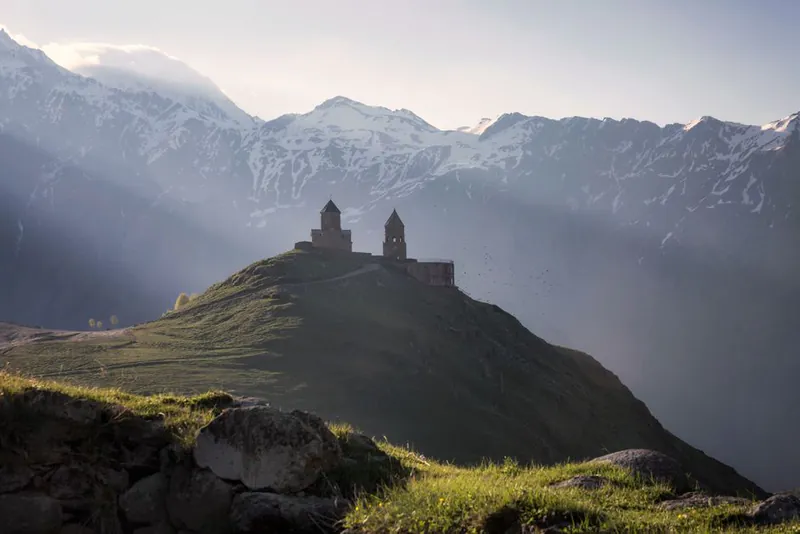
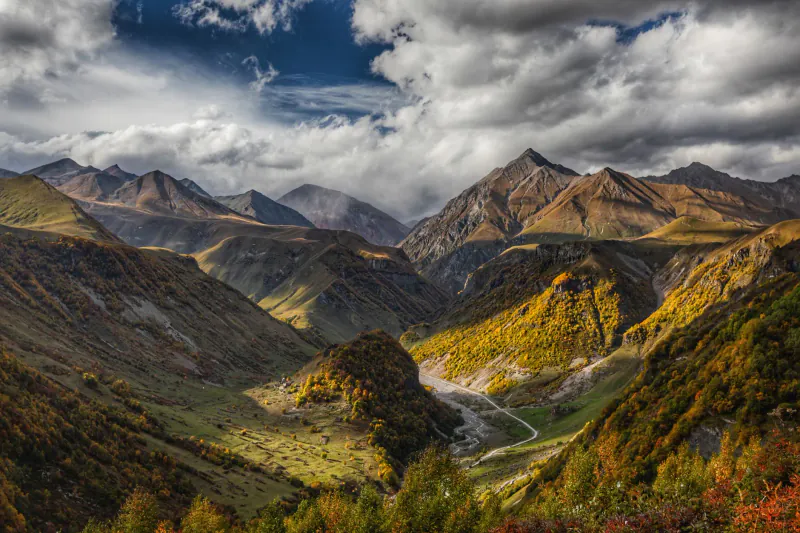
Cover photo by Max Mishin on Pexels.
Want to see how Georgia stacks up?
Are you seriously considering a move? Use our interactive tools to explore Georgia's climate, tax brackets, and nomad visas.
Head-to-Head Relocation Comparisons
Compare taxes, safety, and living costs of Georgia against top alternatives.