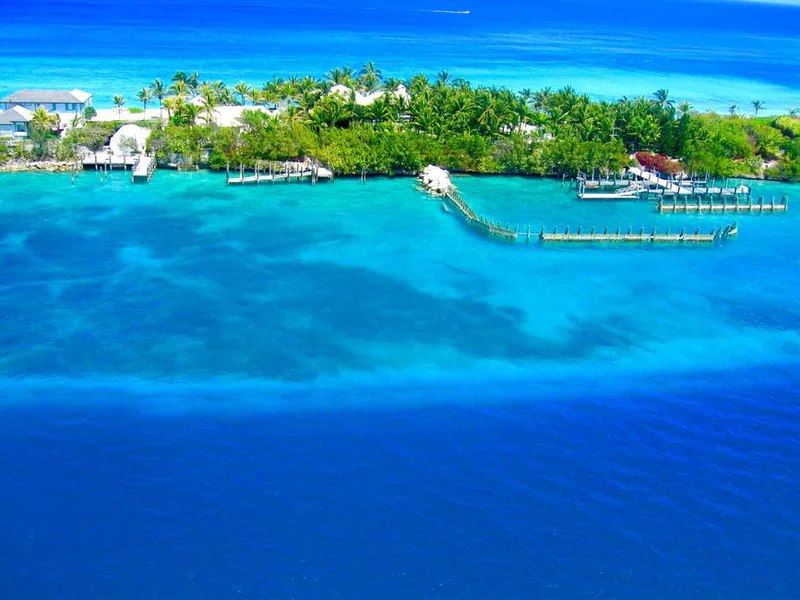
Moving to the Bahamas in 2026: 0% Income Tax But $1M to Get In - Is It Worth It?
July 20, 2026
ShareThe Bahamas has never levied a personal income tax in its entire history - no salary tax, no capital gains tax, no inheritance tax - but the price of entry into that zero-tax world just jumped to $1 million, and Nassau's "Over the Hill" district now accounts for 68% of all violent crime against visitors. This is a genuinely two-sided destination: extraordinary tax architecture and pink-sand scenery sitting fifty minutes from Miami, layered directly on top of a real and rising crime problem. This is everything you need to know before you move.[1][2]
The Economy: Eyes Open
The Bahamian economy grew a strong 3.6% in 2025, driven by booming cruise tourism and continued Family Islands investment. But the IMF's own forward projections tell a story of deliberate moderation: growth is expected to slow to 2.2% in 2026 and settle near 1.9% in 2027, with downside risks flagged from tourism demand shocks, energy costs, and imported inflation. That 2026 figure was itself an upward revision - the IMF lifted its original 1.7% forecast by 40 basis points on the back of stronger-than-expected foreign direct investment inflows.[3][4][5]
Standard & Poor's independently pegged 2025 growth at 2.1%, based on the same tourism strength - 11.2 million total arrivals in 2024, up 153% from 2019 pre-pandemic levels - and cited this performance as a factor in a sovereign credit rating upgrade. GDP per capita sits at roughly $39,590, making the Bahamas the wealthiest nation in the Caribbean by that measure.[3]
The honest caveat, voiced even by domestic bankers: the IMF itself estimates the Bahamas needs 5.5% sustained annual growth to meaningfully cut unemployment, more than double what's currently projected. For an expat, the practical read is straightforward - a stable, tourism-and-FDI-driven economy that isn't racing ahead, layered under a tax and residency framework aimed squarely at high-net-worth individuals rather than mass migration.[6][3]
Visas and Residency: What Changed in 2026
The Core Routes
The Bahamas does not market a branded "golden visa," but has long offered Economic Permanent Residency to foreign nationals who purchase qualifying property - one of the Caribbean's oldest and most established investor-residency frameworks.[6]
| Route | Minimum Investment | Duration | Processing |
|---|---|---|---|
| Economic Permanent Residency (accelerated) | $1,500,000+ in property | Permanent | 4-6 months[6] |
| Economic Permanent Residency (standard) | $1,000,000+ in property | Permanent | 12-24 months[1] |
| Annual Homeowner's Residence Card | No fixed statutory minimum (~$250,000+ in practice) | 1 year, renewable | Weeks[1] |
| Annual Residency (financial means, no property) | Demonstrated sufficient passive income | 1 year, renewable | Variable[6] |
The Key 2026 Change
Effective 1 January 2025, the minimum qualifying real-estate investment for Economic Permanent Residency was raised from BSD 750,000 to BSD 1,000,000 (Bahamian dollars, pegged 1:1 to USD) - repositioning the programme firmly in the high-net-worth tier alongside Cayman and Monaco rather than competing with mid-market Caribbean alternatives. Qualifying investments are limited to Bahamian real estate or zero-coupon bonds issued by the Central Bank of the Bahamas, and must be held for at least 10 years - selling early risks revocation of residency status.[7][1]
A separate July 2026 legislative amendment (the International Persons Landholding Amendment Act, effective 1 July 2026) restructured the Home Owner Resident Permit fee schedule: the primary permit holder's annual fee rose from $250 to $1,000, with a new $500 fee introduced for the spouse (secondary permit holder), and dependent minor children now included at no additional charge.[8]
Documentation Requirements
Economic Permanent Residency applications require: police certificates from every country of residence in the past 5-10 years, an original medical certificate, character references from persons of good standing, proof of lawful source of funds, and - for all foreign-issued civil documents - Hague Apostille certification plus Ministry of Foreign Affairs authentication and certified English translation with a Bahamian $10 postage stamp affixed. The non-refundable government processing fee is $200, with total legal and transactional costs for the property-plus-EPR package typically running $40,000-$80,000 on top of the property price.[7][1]
Permit to Reside (Non-Investment Route)
For those not deploying seven figures, the Permit to Reside (Annual Permit) suits students, dependents of legal residents, or those with a Bahamian sponsor. It requires a financial reference from a bank or CPA, character references, and - notably - applicants "should not be in the country during processing," with turnaround of 8-12 weeks once fully submitted.[9]
Physical Presence
Permanent Residency itself carries no minimum annual stay requirement - many holders use it purely as a second-home base. But claiming actual Bahamian tax residency (the point of the whole exercise for most applicants) requires a separate Tax Residency Certificate, which does demand 90+ days of physical presence and confirmation that no other single country hosted the applicant for 183+ days that year.[1][6]
The Critical Gap: No Path to Citizenship
This is the detail that trips up unprepared applicants: Bahamian Permanent Residency does not lead to citizenship. The Bahamas treats residency and citizenship as entirely separate matters - citizenship comes only through birth, descent, or marriage to a Bahamian citizen, plus an extremely rare, Cabinet-discretionary naturalization route after roughly 10 years that is almost never used by investment residents. Anyone entering this programme expecting an eventual Bahamian passport is working from a false premise; those wanting a second passport alongside Bahamian residency typically pair it with a separate Caribbean citizenship-by-investment programme.[1][6]
Family Inclusion
Spouse and dependent children under 18 (or under 21 if in full-time education and financially dependent) are included in the principal EPR application. Parents and other relatives are assessed separately and generally need their own Annual Residency application.[6]
Cost of Living: The Real Numbers
The Bahamas is genuinely one of the most expensive jurisdictions in the Caribbean - most goods are imported, and customs duties layer 30-50% onto typical US retail prices. A mid-range single-person lifestyle in Nassau runs approximately $5,200/month including a comfortable one-bedroom, regular taxi or ride-share use, a mix of home cooking and casual dining, and moderate social activity. Rewire Abroad's 2026 tracker pegs a decent one-bedroom in Nassau's city center at $2,400+/month, with utilities adding another $200-300 due to notably expensive electricity.[10][1][6]
Rent by Area (Nassau, 2026)
| Housing Type | City Center | Outside Center |
|---|---|---|
| 1-Bedroom | $2,400/month[10] | $1,800/month[10] |
| 3-Bedroom | $4,500/month[10] | $3,400/month[10] |
Daily Expenses (Nassau, 2026)
| Item | Cost (USD) |
|---|---|
| Inexpensive restaurant meal | $40[10] |
| Mid-range restaurant meal | $118[10] |
| Cappuccino | $5.50[10] |
| Utilities (monthly average) | $318[10] |
| Mobile plan (monthly) | $71[10] |
| Gym membership (monthly) | $196[10] |
| Health insurance (private, monthly) | $300+[10] |
| Public transport (jitney, per ride) | $1.25[10] |
| Gasoline (per gallon) | $5.39[11] |
| Milk (1 gallon) | $19.37[11] |
Nassau itself runs about 19% more expensive than the Bahamian national average, with housing costs 26.7% above the country-wide baseline and childcare a striking 54.4% higher.[11]
Taxes: What You Actually Pay
This is the Bahamas' entire value proposition, and it's genuinely unmatched: the country has never enacted a personal income tax - the zero-tax status is structural and constitutional, not a special regime subject to repeal.[1]
| Tax Category | Rate |
|---|---|
| Personal income tax | 0% - does not exist[1] |
| Capital gains tax | 0%[1] |
| Inheritance / estate / gift tax | 0%[1] |
| Wealth tax | 0%[1] |
| Dividend / interest withholding tax | 0%[1] |
| VAT (standard rate) | 10%[1] |
| Corporate tax (below Pillar Two threshold) | 0%[1] |
| Domestic Minimum Top-up Tax (large multinationals only) | 15%, effective 2025[1] |
| Real property tax | 0.625%-1% above threshold[1] |
| Stamp duty on real estate transfer | 2.5%-10% sliding scale, often split buyer/seller[1] |
| National Insurance (local employment) | ~9.8% combined, capped[1] |
The government funds itself instead through VAT, customs duties, real property tax, business licence fees, and tourism levies - which is precisely why imported goods and real estate transaction costs run comparatively high even as income itself goes untaxed.[1]
The Critical Caveat Everyone Misses
Bahamian tax residency is only meaningful if you've genuinely severed tax residency in your home country. UK nationals, for example, must pass HMRC's Statutory Residence Test; simply holding a Bahamian PR card while remaining UK tax-resident changes nothing about UK tax obligations. US citizens face the hardest constraint of all: the US taxes citizens on worldwide income regardless of residence. Moving to the Bahamas eliminates state income tax and unlocks the Foreign Earned Income Exclusion (~$130,000 in 2026) for active foreign-earned income, but federal tax on dividends, capital gains, and passive income continues indefinitely. The only way to eliminate US tax entirely is formal expatriation, which can trigger the IRC §877A exit tax.[6][1]
The Bahamas is not currently on the EU's Annex I tax blacklist as of 2026, though it has appeared periodically on the Annex II "grey list" for specific compliance commitments - worth checking against the latest EU Council list before finalizing any tax-planning decision.[1]
Healthcare: Public vs. Private
Public healthcare access is not available to expats in any meaningful sense. The National Health Insurance (NHI) system is reserved for citizens and legal residents, and even then only covers basic primary and preventive care - it explicitly excludes hospitalizations and emergency treatment. Expats are simply not eligible for NHI.[12]
This makes private international insurance the default and only realistic option for any long-term expat. Providers like Cigna Global, AXA, Allianz Care, IMG, and VUMI offer plans covering hospitalization at top facilities such as Doctors Hospital and Princess Margaret Hospital, plus medical evacuation - a genuinely essential inclusion given the limited scope of specialist care available locally. The 2026 tracked cost for private health insurance runs $300+/month for an individual, scaling up with age and coverage level.[13][10][12]
Medical evacuation coverage is not optional in practice. Advanced or complex medical cases - cardiac surgery, complex cancer treatment, major trauma - routinely require travel to the United States, since specialist capacity outside Nassau and Freeport is limited.[12][1]
Safety
This is the section that requires the most honesty, and the data has moved sharply in the wrong direction through early 2026. The US State Department maintains a Level 2 "Exercise Increased Caution" advisory as of March 2026, explicitly citing "increased risks of robberies, burglaries." Australia's Smartraveller and Canada's travel advisories carry similarly elevated warnings, with all three governments pointing to deteriorating security conditions concentrated in urban centres.[2]
The numbers back up the advisories. Tourist-targeted crime rose 23% year-on-year in New Providence (Nassau's island) through early 2026. Armed robbery incidents targeting visitors climbed from 692 in Q1 2025 to 847 in Q1 2026. Carjacking attempts, disproportionately targeting rental vehicles because of their distinctive plates, rose 41% year-on-year. Sexual assault incidents affecting female travellers in New Providence rose 12% over January-February 2026, with average police response times of 47 minutes for non-emergency calls.[2]
The Specific Danger Zone
Nassau's "Over the Hill" district - a roughly 4.2-square-kilometre area immediately south of downtown - is strictly off-limits and accounts for 68% of all violent crime affecting visitors, according to Royal Bahamas Police Force statistics through March 2026. By contrast, the resort corridors of Cable Beach and Paradise Island maintain private security patrols coordinating directly with local police and see materially fewer incidents.[2]
Regional Safety Comparison
| Location | Crime Trend (2026) | Notes |
|---|---|---|
| Nassau - Over the Hill | Very High | 68% of visitor violent crime; strictly avoid[2] |
| Nassau - Cable Beach/Paradise Island | Moderate, resort-secured | Private security, better lit[2] |
| Grand Bahama (Freeport) | Elevated | 31% lower than Nassau overall, but armed robbery up 18% since January[2] |
| Family Islands (Exuma, Eleuthera, Abaco) | Low | Traditional community policing still effective[2] |
| Andros | Minimal incidents | Very low crime but lacks comprehensive medical facilities[2] |
Most incidents concentrate between 22:00 and 04:00, targeting visitors displaying visible jewellery, electronics, or cash. Practical precautions that meaningfully reduce risk: use hotel safes, book airport transfers through verified hotel services rather than independent operators, avoid displaying wealth indicators, and choose accommodation in established resort areas or the Family Islands over independent city-center stays.[2]
English in Everyday Life
English is the sole official language of the Bahamas, and this is one dimension where the country offers zero friction - there is no Spanish, French, or local-language barrier to navigate for government services, banking, healthcare, or daily commerce. This distinguishes the Bahamas sharply from most Latin American and Gulf destinations, where language remains a genuine hurdle for administrative processes.[1]
Which Island or Neighborhood?
New Providence (Nassau)
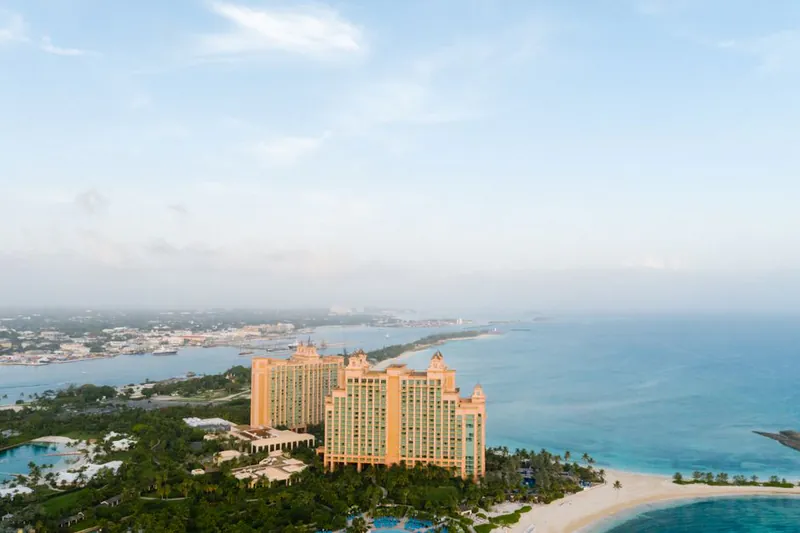
The capital island, hosting the largest population, the international airport, the majority of private hospitals, and the highest concentration of both wealth and crime in the country. Lyford Cay and Old Fort Bay are gated communities on New Providence representing some of the most exclusive residential environments in the world, with dedicated private security. Cable Beach and Paradise Island offer resort-grade security for those wanting beachfront access without venturing into higher-risk zones.[6][2]
Grand Bahama (Freeport)
Bahamas' second-largest urban center, historically damaged by Hurricane Dorian in 2019, with crime running about 31% lower than Nassau but a recent uptick in armed robbery. More affordable than New Providence but with narrower private healthcare and international-school options.[3][2]
The Exumas
A collection of private-island and boutique luxury communities, popular with the ultra-high-net-worth segment, and among the most common locations for Economic Permanent Residency property purchases alongside Nassau's Lyford Cay and Paradise Island. Crime rates are significantly lower than New Providence; the trade-off is limited medical infrastructure and reliance on private aviation for connectivity.[1]
Eleuthera, Abaco, Harbour Island
Quieter, more traditional Family Island communities offering lower cost of living relative to Nassau, effective community policing, and a slower-paced lifestyle - but genuinely limited specialist medical care, making these better suited to healthy retirees or younger expats than those with complex medical needs.[2][6]
Island Comparison at a Glance
| Island/Area | Cost Level | Crime Level | Best For |
|---|---|---|---|
| Nassau (Cable Beach/Paradise Island) | High | Moderate, resort-secured | Business, healthcare access, HNW residents |
| Nassau (Over the Hill) | - | Very high | Avoid |
| Grand Bahama | Moderate | Elevated, rising | Budget-conscious relocators |
| The Exumas | Very high | Low | Ultra-HNW, private-island lifestyle |
| Family Islands (Eleuthera, Abaco) | Moderate | Low | Retirees, slower-paced expats |
Buying Property
Foreign nationals can purchase Bahamian real estate, but government approval under the International Persons Landholding Act may be required for certain purchases, particularly land, and the July 2026 amendment specifically restructured the fee schedule and permit mechanics for foreign owner-occupiers. Property must be a genuine arms-length purchase held in the applicant's own name or a qualifying company.[8][6]
The Financial Reality of Property-Linked Residency
| Cost Component | Amount |
|---|---|
| Minimum qualifying property (standard EPR) | $1,000,000[1] |
| Minimum for accelerated processing | $1,500,000[6] |
| Stamp duty on transfer | 2.5%-10% sliding scale (often split buyer/seller)[1] |
| VAT on real estate transactions above $100,000 | 10%[1] |
| EPR government application fee | $10,000+ (varies; spouse/dependents additional)[1] |
| Legal/advisory fees (property + EPR combined) | $15,000-$40,000[1] |
| Total realistic all-in cost | ~$1.05M-$1.5M+ at the current minimum threshold[1] |
| Annual real property tax | 0.625%-1% above threshold[1] |
Homeowner's insurance runs notably high given the Bahamas' Atlantic hurricane exposure - Abaco and Grand Bahama suffered severe damage from Hurricane Dorian in 2019, and building standards vary meaningfully by island and by individual development. The property market itself, particularly on New Providence, the Exumas, and Abaco, is sophisticated and priced for a high-net-worth clientele, with intense competition for prime listings and some documented developer project failures - professional conveyancing representation and thorough developer due diligence are essential rather than optional.[6]
Banking friction is a genuine, underappreciated obstacle. Since the 2000s, the Bahamas has undergone significant banking-sector consolidation and AML/KYC tightening; several major international banks have exited the Bahamian retail market entirely. Private banking remains available but expect thorough, time-consuming due diligence on any large transfer.[6]
Important: as with virtually every Caribbean residency-by-investment programme, buying property confers residency - not citizenship, and not automatically even that without a separate, successful EPR application.[6]
Your First Steps: The Checklist
- Decide whether the Bahamas serves your goals - if a second passport is the ultimate aim, the Bahamas is the wrong programme entirely; residency here never converts to citizenship for investors[6]
- Confirm genuine tax-residency intent in your home country - Bahamian PR only reduces your tax bill if you can demonstrably sever tax residency at home; US citizens cannot escape worldwide taxation without formal expatriation[1]
- Budget realistically: $1,000,000+ for the qualifying property, plus $40,000-$80,000 in stamp duty, VAT, legal, and government fees[1]
- Engage a licensed Bahamian immigration attorney and conveyancing lawyer before any property search begins - both the EPR filing and the International Persons Landholding Act clearance depend on proper legal representation[8][6]
- Gather apostilled documents in parallel with your property search: police certificates from every country of residence in the past 5-10 years, medical certificate, character references, and full source-of-funds documentation[7][1]
- Choose your location with crime data in hand - Cable Beach, Paradise Island, Lyford Cay, or the Family Islands over any part of central Nassau outside the resort corridors[2][6]
- Arrange private international health insurance with medical evacuation coverage before relocating - NHI is not available to expats under any circumstance[12]
- Factor hurricane insurance and building-standard due diligence into any purchase, particularly on Grand Bahama and Abaco[6]
- Budget for import costs - groceries, vehicles, and consumer goods run 30-50% above US retail because of customs duties[1]
- Apply for a Tax Residency Certificate separately from your PR application if triggering actual Bahamian tax residency is your goal - it requires 90+ days of physical presence and is issued by the Ministry of Finance, not the Department of Immigration[1]
Key Data at a Glance
| Indicator | Value |
|---|---|
| GDP Growth 2025 (actual) | 3.6%[5] |
| GDP Growth Forecast 2026 (IMF) | 2.2%[5] |
| GDP Growth Forecast 2027 (IMF) | 1.9%[5] |
| GDP per Capita | ~$39,590[3] |
| Personal Income Tax | 0% - never enacted[1] |
| Capital Gains / Inheritance / Wealth Tax | 0% across all three[1] |
| VAT | 10%[1] |
| Economic Permanent Residency Minimum | $1,000,000 (raised Jan 2025 from $750,000)[1] |
| Accelerated EPR Threshold | $1,500,000[6] |
| EPR Processing (accelerated) | 4-6 months[6] |
| EPR Processing (standard) | 12-24 months[1] |
| Path to Citizenship via Investment | None - residency only[6] |
| US Travel Advisory (March 2026) | Level 2 - Exercise Increased Caution[2] |
| Tourist Crime Increase (New Providence, YoY) | 23%[2] |
| Armed Robbery Incidents (Q1 2026 vs Q1 2025) | 847 vs 692[2] |
| Carjacking Increase (YoY) | 41%[2] |
| "Over the Hill" Share of Visitor Violent Crime | 68%[2] |
| Mid-Range Single Monthly Budget (Nassau) | ~$5,200[10] |
| 1-BR Rent (Nassau city center) | $2,400/month[10] |
| Private Health Insurance (individual) | $300+/month[10] |
| Home Owner Resident Permit Fee (primary, 2026) | $1,000/year (up from $250)[8] |
The Bahamas in 2026 rewards exactly one profile clearly: high-net-worth individuals who want genuine 0% taxation, English common law, and proximity to the US, and who are willing to pay seven figures and exercise real street-smarts about where in Nassau they actually spend time.
References
Tax-Free Residency in the Bahamas: Complete 2026 Guide - The Bahamas is one of the few sovereign jurisdictions in the world that has never levied a personal ...
Entry Requirements &... - Bahamas travel advisory warning 2026: live travel warning check - safety score, current travel warni...
'Even stronger growth' call as IMF upgrades Bahamas - The Tribune - A Cabinet minister yesterday asserted the Government is aiming “for even stronger growth” after the ...
IMF Says Growth of the Bahamian Economy Will Continue ... - WASHINGTON, DC - The International Monetary Fund (IMF) says The Bahamas economy remains resilient ev...
Economic Permanent Residency Guide 2026 - A complete guide to the Bahamas' investment residency pathways - principally Economic Permanent Resi...
Permanent Residence - To qualify for economic Permanent Residency status, individuals must make a minimum investment of $1...
Permit To Reside - Non-Bahamian nationals who are desirous of living for any purpose other than working in the Bahamas,...
Living in Nassau, Bahamas (2026) - Rewire Abroad - An open-source website built with Payload and Next.js.
Cost of Living in Nassau, Bahamas (2026) - Bahamas overall average Nassau is 11.1% more expensive than Bahamas overall. Restaurants pay 5.0% le...
Health Insurance Options for Expats and Visitors in the Bahamas - Health Insurance Options for Expats and Visitors in the Bahamas Expats and visitors in the Bahamas r...
Top 9 Insurance Companies in the Bahamas for Expats - Compare top health insurance providers for expats in the Bahamas, such as Allianz Care, AXA, IMG, an...
Frequently Asked Questions
What are the primary visa and residence options for moving to Bahamas in 2026? The Bahamas does not market a branded "golden visa," but has long offered Economic Permanent Residency to foreign nationals who purchase qualifying property - one of the Caribbean's oldest and most established investor-residency frameworks.
How does personal income tax work for expats in Bahamas? This is the Bahamas' entire value proposition, and it's genuinely unmatched: the country has never enacted a personal income tax - the zero-tax status is structural and constitutional, not a special regime subject to repeal.
What is the average cost of rent and living in Bahamas? A mid-range single-person lifestyle in Nassau runs approximately $5,200/month including a comfortable one-bedroom, regular taxi or ride-share use, a mix of home cooking and casual dining, and moderate social activity.
How many years of residence are required for citizenship or permanent residency in Bahamas? This is the detail that trips up unprepared applicants: Bahamian Permanent Residency does not lead to citizenship.
Want to see how Bahamas stacks up?
Are you seriously considering a move? Use our interactive tools to explore Bahamas's climate, tax brackets, and nomad visas.
Head-to-Head Relocation Comparisons
Compare taxes, safety, and living costs of Bahamas against top alternatives.